Word Explanation
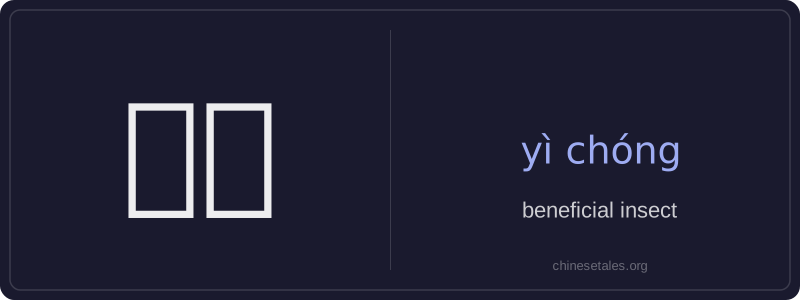
'益虫' literally means 'beneficial insect' — the character 益 (yì) means 'benefit', 'advantage', or 'to benefit', while 虫 (chóng) means 'insect'. Together, they form a compound noun referring to insects that provide ecological or agricultural benefits, such as pollinating crops, preying on pests, or enriching soil. Common examples include ladybugs, bees, lacewings, and earthworms (though technically an annelid, it's often colloquially grouped here).
This term is frequently used in agriculture, ecology, and environmental education to contrast with 害虫 (hài chóng, 'pest'). It carries a positive, protective connotation and appears in scientific outreach, farming guidelines, and nature documentaries. Unlike general terms like 昆虫 (kūnchóng, 'insect'), 益虫 specifically highlights function and human-centered value, making it a context-dependent label rather than a strict biological category.
Example Sentences
Related Words
国语
‘Guó yǔ’ literally means 'national language'—
无论谁
‘无论谁’ (wú lùn shéi) is a pronoun meaning
外语
‘外语’ literally means ‘outside language’ —
不对
不对 (bù duì) literally combines 不 (bù), meani
违规
违规 (wéi guī) literally means 'to violate rules
亲笔
‘亲笔’ literally means ‘one’s own hand’—comb
我的
我的 (wǒ de) is a possessive pronoun meaning 'my'
面条
‘面条’ (miàn tiáo) literally means ‘flour str