Word Explanation
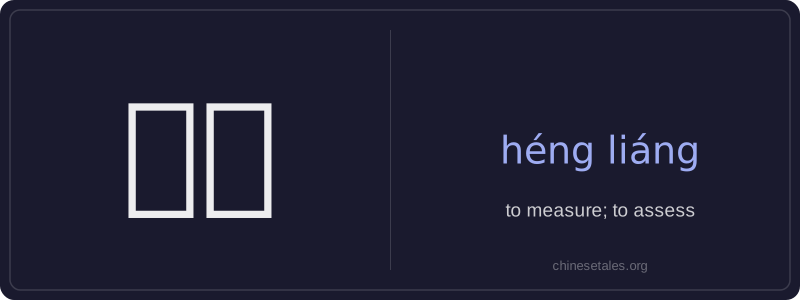
衡量 is a verb meaning 'to measure' or 'to assess'—especially in abstract, evaluative contexts like performance, value, quality, or impact. It combines two characters: 衡 (héng), originally meaning 'a balance scale' and now evoking fairness, calibration, or standard; and 量 (liáng), meaning 'to measure' (as a verb) or 'quantity' (as a noun). Together, they emphasize careful, often comparative evaluation against a benchmark—not just physical measurement but reasoned judgment.
This word is commonly used in formal, academic, professional, or policy-related settings—for example, when evaluating educational outcomes, economic indicators, environmental impact, or personal growth. It rarely appears in casual speech about everyday objects (e.g., you wouldn’t use 衡量 to say 'measure the length of a table'; for that, use 测量 or 量). Instead, it implies thoughtful appraisal: weighing pros and cons, gauging significance, or determining adequacy relative to goals or standards.
Example Sentences
Related Words
国语
‘Guó yǔ’ literally means 'national language'—
无论谁
‘无论谁’ (wú lùn shéi) is a pronoun meaning
外语
‘外语’ literally means ‘outside language’ —
不对
不对 (bù duì) literally combines 不 (bù), meani
违规
违规 (wéi guī) literally means 'to violate rules
亲笔
‘亲笔’ literally means ‘one’s own hand’—comb
我的
我的 (wǒ de) is a possessive pronoun meaning 'my'
面条
‘面条’ (miàn tiáo) literally means ‘flour str