Word Explanation
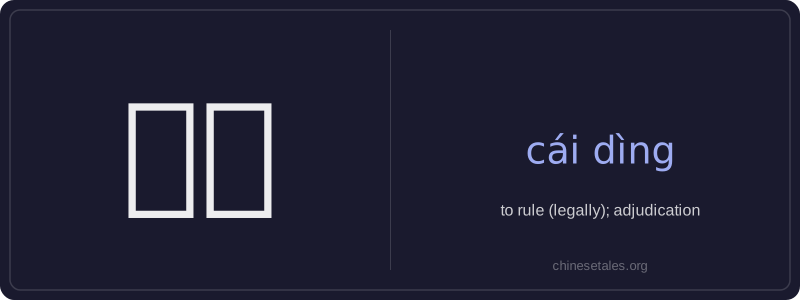
‘裁定’ is a formal legal term meaning 'to rule' or 'to adjudicate'—typically used when a judge, tribunal, or authorized body makes an official decision on a matter, especially in civil or administrative cases. The character 裁 (cái) conveys the idea of cutting, selecting, or deciding after careful judgment; 定 (dìng) means 'to fix', 'to settle', or 'to determine'. Together, they emphasize a binding, authoritative conclusion reached through deliberation and procedure.
This word appears almost exclusively in legal, judicial, or official administrative contexts—not in casual speech. It’s commonly found in court documents, news reports about lawsuits, or government announcements. While it can function as a verb (e.g., 法院裁定…), it more frequently serves as a noun meaning 'ruling' or 'adjudication' (e.g., 一项裁定). Unlike colloquial terms like 决定 (juédìng, 'decision'), 裁定 implies legal weight, finality, and procedural legitimacy.
Example Sentences
Related Words
国语
‘Guó yǔ’ literally means 'national language'—
无论谁
‘无论谁’ (wú lùn shéi) is a pronoun meaning
外语
‘外语’ literally means ‘outside language’ —
不对
不对 (bù duì) literally combines 不 (bù), meani
违规
违规 (wéi guī) literally means 'to violate rules
亲笔
‘亲笔’ literally means ‘one’s own hand’—comb
我的
我的 (wǒ de) is a possessive pronoun meaning 'my'
面条
‘面条’ (miàn tiáo) literally means ‘flour str