Word Explanation
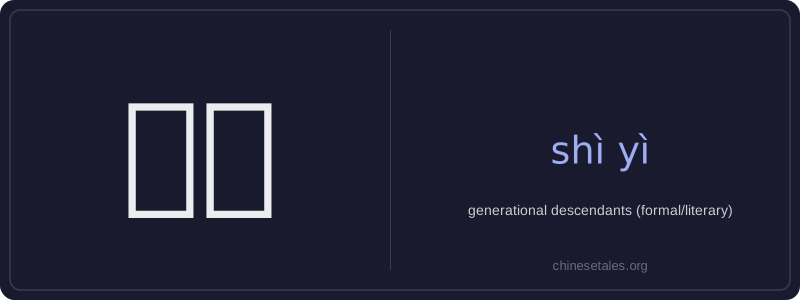
Shì yì is a formal, literary noun meaning 'generational descendants' — those who inherit lineage across multiple generations. The character shì (世) means 'generation', 'age', or 'world', and often denotes a span of time or familial succession; yì (裔) means 'descendant', 'offspring', or 'lineal heir', historically used in classical texts to refer to bloodline continuity. Together, shì yì emphasizes deep ancestral continuity — not just immediate children, but descendants across centuries.
This term appears most frequently in historical, genealogical, or ceremonial contexts: official records of noble families, conservation documents about endangered species with documented lineages, or scholarly discussions of cultural inheritance. It carries solemn, respectful connotations and is rarely used in casual speech. While it can apply to human lineages, it’s also employed in zoology and ecology when tracing hereditary traits or breeding lines — especially for rare or protected animals whose pedigree is carefully preserved.
Example Sentences
Related Words
国语
‘Guó yǔ’ literally means 'national language'—
无论谁
‘无论谁’ (wú lùn shéi) is a pronoun meaning
外语
‘外语’ literally means ‘outside language’ —
不对
不对 (bù duì) literally combines 不 (bù), meani
违规
违规 (wéi guī) literally means 'to violate rules
亲笔
‘亲笔’ literally means ‘one’s own hand’—comb
我的
我的 (wǒ de) is a possessive pronoun meaning 'my'
面条
‘面条’ (miàn tiáo) literally means ‘flour str