Word Explanation
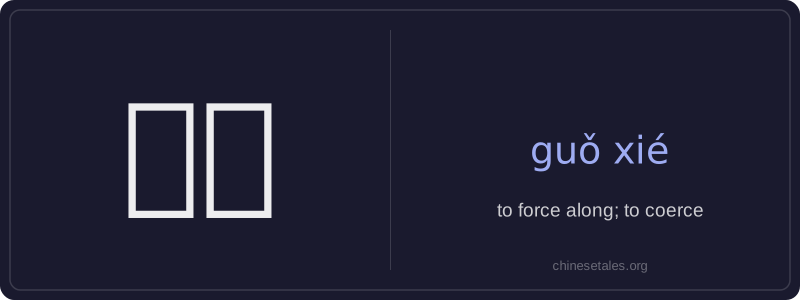
裹挟 (guǒ xié) is a compound verb meaning 'to force along' or 'to coerce'—literally, to wrap around (裹) and hold tightly (挟), implying irresistible pressure that drags someone into an action against their will. It often describes situations where individuals are swept up by stronger forces—such as group momentum, authority, fear, or social pressure—not through direct orders but through overwhelming circumstance.
The word carries a strong connotation of loss of agency: the person ‘wrapped and held’ has little choice but to comply or go along. It’s commonly used in political, social, or journalistic contexts—for example, describing citizens pressured into supporting a movement, employees coerced into unethical acts, or bystanders drawn into conflict. Unlike simple synonyms like ‘persuade’ or ‘ask’, 裹挟 implies compulsion without explicit consent and often suggests moral ambiguity or danger.
Example Sentences
Related Words
国语
‘Guó yǔ’ literally means 'national language'—
无论谁
‘无论谁’ (wú lùn shéi) is a pronoun meaning
不对
不对 (bù duì) literally combines 不 (bù), meani
外语
‘外语’ literally means ‘outside language’ —
违规
违规 (wéi guī) literally means 'to violate rules
亲笔
‘亲笔’ literally means ‘one’s own hand’—comb
我的
我的 (wǒ de) is a possessive pronoun meaning 'my'
面条
‘面条’ (miàn tiáo) literally means ‘flour str