Word Explanation
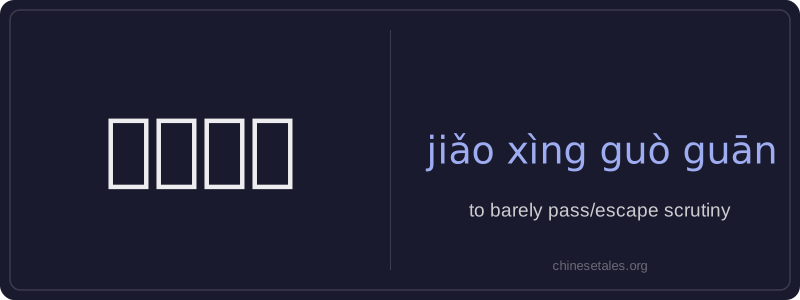
'侥幸过关' literally means 'to narrowly pass/escape through a gate by luck.' It describes succeeding in a test, inspection, or evaluation not through competence or preparation, but by chance — often with an implication of relief mixed with guilt or awareness that the outcome was undeserved. The four characters combine as follows: 侥 (jiǎo) and 幸 (xìng) together form 侥幸, meaning 'by sheer luck' or 'unwarranted hope'; 过 (guò) means 'to pass through,' and 关 (guān) originally refers to a mountain pass or checkpoint — here metaphorically standing for any formal hurdle like an exam, audit, or quality check.
This phrase is commonly used in academic, workplace, or bureaucratic contexts where standards exist but enforcement is inconsistent. It carries a mildly negative or self-deprecating tone — speakers often use it to admit they barely met expectations, sometimes with embarrassment or humor. It's rarely used in formal writing but frequent in spoken Chinese and informal writing when reflecting on close calls.
Example Sentences
Related Words
国语
‘Guó yǔ’ literally means 'national language'—
无论谁
‘无论谁’ (wú lùn shéi) is a pronoun meaning
外语
‘外语’ literally means ‘outside language’ —
不对
不对 (bù duì) literally combines 不 (bù), meani
我的
我的 (wǒ de) is a possessive pronoun meaning 'my'
违规
违规 (wéi guī) literally means 'to violate rules
亲笔
‘亲笔’ literally means ‘one’s own hand’—comb
面条
‘面条’ (miàn tiáo) literally means ‘flour str