Word Explanation
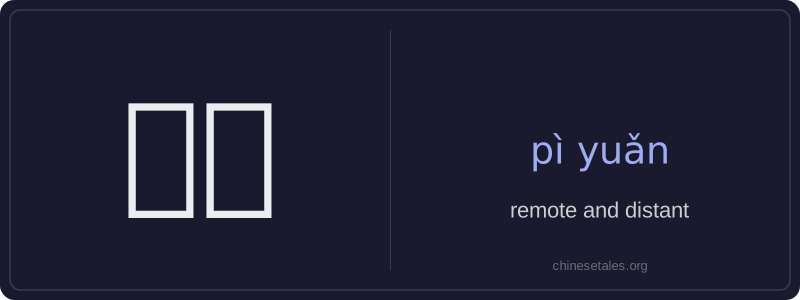
僻远 is a compound adjective meaning 'remote and distant', emphasizing both geographical isolation and inaccessibility. The first character 僻 (pì) conveys 'secluded', 'out-of-the-way', or 'unfrequented', often implying cultural or infrastructural detachment; the second character 远 (yuǎn) simply means 'far' or 'distant'. Together, they intensify the sense of remoteness beyond mere physical distance — suggesting places with sparse population, poor transportation links, and limited contact with urban centers.
This word is commonly used in formal writing, news reports, and descriptive narratives about geography, development, or rural life. It carries a neutral-to-slightly literary tone and is rarely used in casual speech. You’ll often see it modifying nouns like 地区 (region), 村落 (village), or 山区 (mountainous area). Unlike simpler terms like 偏远, 僻远 suggests deeper seclusion — not just 'off the beaten path', but nearly cut off from mainstream society.
Example Sentences
Related Words
国语
‘Guó yǔ’ literally means 'national language'—
无论谁
‘无论谁’ (wú lùn shéi) is a pronoun meaning
外语
‘外语’ literally means ‘outside language’ —
不对
不对 (bù duì) literally combines 不 (bù), meani
我的
我的 (wǒ de) is a possessive pronoun meaning 'my'
违规
违规 (wéi guī) literally means 'to violate rules
亲笔
‘亲笔’ literally means ‘one’s own hand’—comb
面条
‘面条’ (miàn tiáo) literally means ‘flour str