Word Explanation
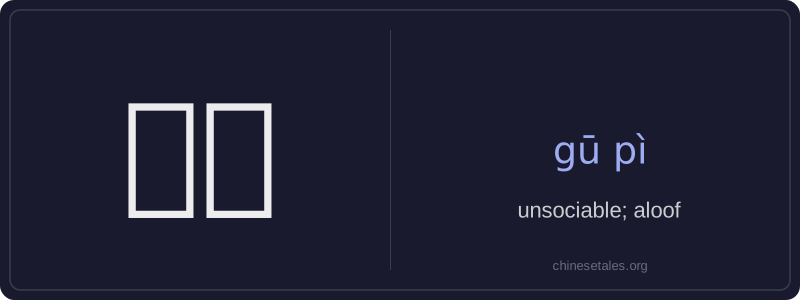
孤僻 (gū pì) is an adjective describing someone who is habitually unsociable, withdrawn, or emotionally distant from others. The character 孤 means 'orphaned' or 'alone', evoking isolation and lack of close bonds; 僻 means 'secluded', 'remote', or 'uncommon', suggesting avoidance of mainstream social interaction. Together, they form a compound that emphasizes both emotional solitude and behavioral aloofness—not just shyness, but a deeper, often long-standing tendency to withdraw from people and social settings.
This word carries a mildly negative or clinical connotation and is commonly used in psychological, educational, or observational contexts—e.g., when describing personality traits in children, adults with social anxiety, or literary characters. It’s not typically used for temporary moodiness or situational quietness, but rather for a consistent pattern of social detachment. While neutral in grammar, it often implies concern or diagnosis in real-world usage, especially in formal or caregiving discourse.
Example Sentences
Related Words
国语
‘Guó yǔ’ literally means 'national language'—
无论谁
‘无论谁’ (wú lùn shéi) is a pronoun meaning
外语
‘外语’ literally means ‘outside language’ —
不对
不对 (bù duì) literally combines 不 (bù), meani
我的
我的 (wǒ de) is a possessive pronoun meaning 'my'
违规
违规 (wéi guī) literally means 'to violate rules
亲笔
‘亲笔’ literally means ‘one’s own hand’—comb
面条
‘面条’ (miàn tiáo) literally means ‘flour str