Word Explanation
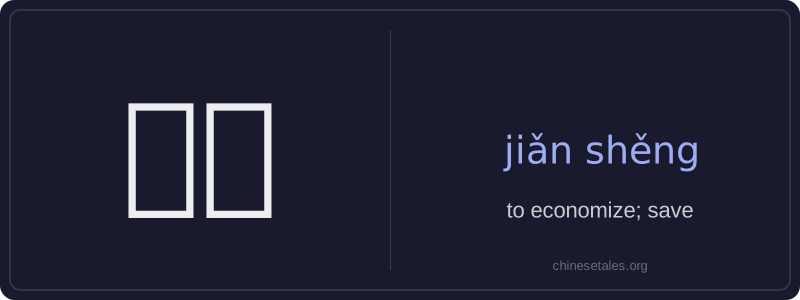
俭省 is a verb meaning 'to economize' or 'to save (money or resources)'. It combines two characters: 俭 (jiǎn), meaning 'frugal' or 'thrifty', and 省 (shěng), meaning 'to save' or 'to reduce'. Together, they emphasize conscious, habitual restraint in spending or using resources — not just cutting costs, but doing so with prudence and intention. The word carries a positive, morally commendable connotation in Chinese culture, often associated with virtue, wisdom, and long-term planning.
It’s commonly used in contexts involving household management, personal finance, or sustainable living — for example, describing how a family budgets carefully or how an elderly person reuses items to avoid waste. While it can refer to saving money, it also extends to conserving energy, time, or materials. 俭省 is more formal and literary than everyday alternatives like 节省 (jié shěng), and frequently appears in written language, advice columns, or moral instruction.
Example Sentences
Related Words
国语
‘Guó yǔ’ literally means 'national language'—
无论谁
‘无论谁’ (wú lùn shéi) is a pronoun meaning
外语
‘外语’ literally means ‘outside language’ —
不对
不对 (bù duì) literally combines 不 (bù), meani
我的
我的 (wǒ de) is a possessive pronoun meaning 'my'
违规
违规 (wéi guī) literally means 'to violate rules
亲笔
‘亲笔’ literally means ‘one’s own hand’—comb
面条
‘面条’ (miàn tiáo) literally means ‘flour str