Word Explanation
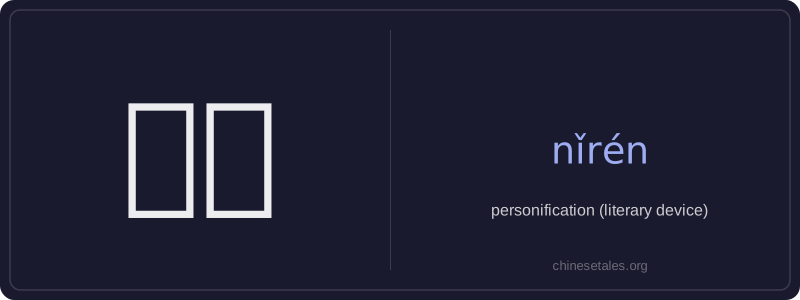
‘拟人’ (nǐrén) is a literary device meaning ‘personification’—the attribution of human qualities, emotions, or actions to non-human things, especially animals, plants, natural forces, or inanimate objects. The character 拟 (nǐ) means ‘to imitate’ or ‘to liken’, and 人 (rén) means ‘person’ or ‘human’. Together, they literally convey ‘imitating a person’, capturing the core idea of making something non-human behave or appear as if it were human.
This term is widely used in Chinese literature, poetry, children’s stories, and rhetorical analysis. It helps create vivid imagery and emotional resonance—for example, describing wind ‘whispering’, a river ‘laughing’, or a fox ‘slyly plotting’. While common in creative writing, 拟人 is rarely used in formal academic or scientific contexts unless discussing literary technique itself. It’s also frequently taught in middle school Chinese language classes as one of the fundamental rhetorical devices alongside metaphor and simile.
Example Sentences
Related Words
国语
‘Guó yǔ’ literally means 'national language'—
无论谁
‘无论谁’ (wú lùn shéi) is a pronoun meaning
外语
‘外语’ literally means ‘outside language’ —
不对
不对 (bù duì) literally combines 不 (bù), meani
我的
我的 (wǒ de) is a possessive pronoun meaning 'my'
违规
违规 (wéi guī) literally means 'to violate rules
亲笔
‘亲笔’ literally means ‘one’s own hand’—comb
面条
‘面条’ (miàn tiáo) literally means ‘flour str