Word Explanation
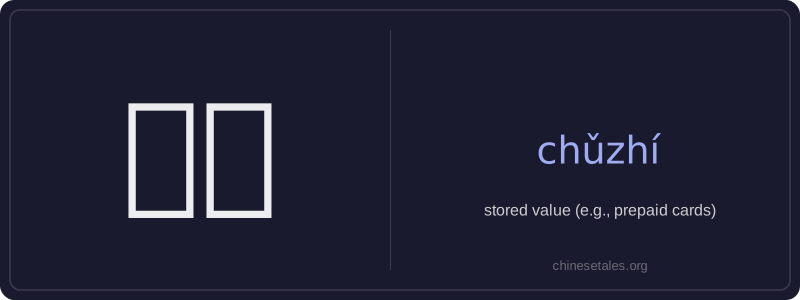
'Chǔzhí' (储值) literally combines 'chǔ' (to store, hold) and 'zhí' (value, worth), meaning 'stored value'—a financial concept where money is preloaded onto a card, account, or digital platform for later use. It’s commonly used in contexts like public transport cards, mobile payment wallets, or gift cards, where users add funds in advance rather than paying per transaction.
This term is neutral and widely understood across mainland China, Taiwan, and Singapore. Unlike general terms like 'prepaid', 储值 specifically emphasizes the technical and functional aspect of value being digitally or physically retained and retrievable. It appears frequently in signage, app interfaces, and customer service announcements—especially where balance checking or top-up procedures are involved. While it can appear in formal documents, it’s also part of everyday spoken language when discussing payments or balances.
Example Sentences
Related Words
国语
‘Guó yǔ’ literally means 'national language'—
无论谁
‘无论谁’ (wú lùn shéi) is a pronoun meaning
外语
‘外语’ literally means ‘outside language’ —
不对
不对 (bù duì) literally combines 不 (bù), meani
我的
我的 (wǒ de) is a possessive pronoun meaning 'my'
违规
违规 (wéi guī) literally means 'to violate rules
亲笔
‘亲笔’ literally means ‘one’s own hand’—comb
面条
‘面条’ (miàn tiáo) literally means ‘flour str