Word Explanation
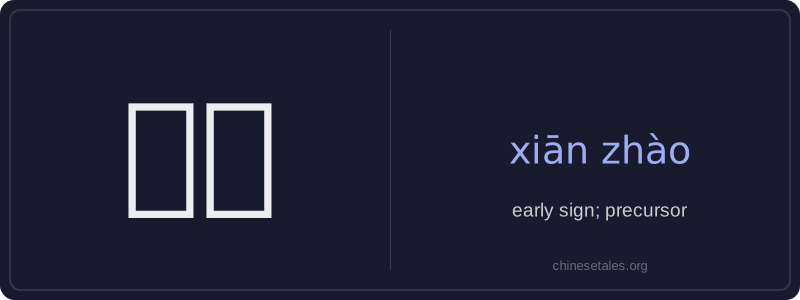
‘先兆’ literally combines 先 (xiān, meaning 'before' or 'earlier') and 兆 (zhào, meaning 'omen', 'sign', or 'portent'). Together, it refers to an early indication that something—often something significant, serious, or impending—is about to happen. It carries a slightly formal or medical tone and is commonly used in contexts where subtle, preliminary signals precede a larger event, especially in health (e.g., warning signs of illness) or natural phenomena (e.g., tremors before an earthquake).
The word implies causality or predictive value: a ‘先兆’ isn’t just coincidence—it’s a meaningful harbinger. While neutral in theory, it often appears in negative contexts (e.g., stroke or labor ‘premonitory symptoms’), though it can also describe positive developments (e.g., early signs of economic recovery). It functions exclusively as a noun and typically appears after descriptive modifiers like ‘明显的’ (obvious) or ‘轻微的’ (mild), or with verbs like ‘出现’ (to appear) or ‘有’ (to have).
Example Sentences
Related Words
国语
‘Guó yǔ’ literally means 'national language'—
无论谁
‘无论谁’ (wú lùn shéi) is a pronoun meaning
外语
‘外语’ literally means ‘outside language’ —
不对
不对 (bù duì) literally combines 不 (bù), meani
我的
我的 (wǒ de) is a possessive pronoun meaning 'my'
违规
违规 (wéi guī) literally means 'to violate rules
亲笔
‘亲笔’ literally means ‘one’s own hand’—comb
面条
‘面条’ (miàn tiáo) literally means ‘flour str