Word Explanation
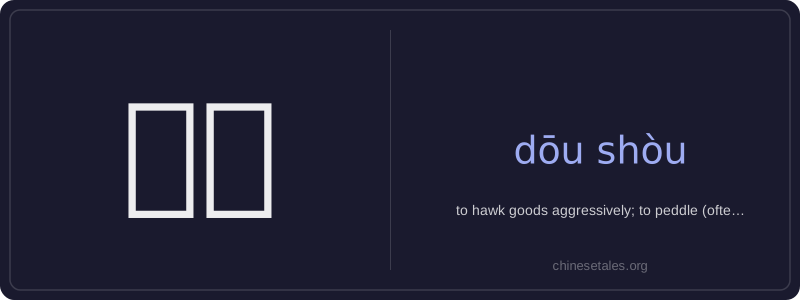
‘兜售’ is a compound verb meaning to aggressively hawk or peddle goods—often in public spaces like streets or markets—and, by extension, to promote ideas, beliefs, or ideologies persistently and persuasively. The first character 兜 (dōu) originally means 'to hold up with the hem of one’s garment' or 'to gather', suggesting an active, encompassing motion; the second character 售 (shòu) means 'to sell'. Together, they evoke the image of someone energetically gathering attention and pushing items—or concepts—onto others.
This word carries a slightly negative or skeptical connotation: it implies persistence that borders on intrusion, overselling, or even manipulation. It’s commonly used in journalism, political commentary, and social criticism—for instance, when describing how certain groups push propaganda, dubious products, or outdated theories. It’s rarely used for polite, routine sales and never for passive display or online listing.
Example Sentences
Related Words
国语
‘Guó yǔ’ literally means 'national language'—
无论谁
‘无论谁’ (wú lùn shéi) is a pronoun meaning
外语
‘外语’ literally means ‘outside language’ —
不对
不对 (bù duì) literally combines 不 (bù), meani
我的
我的 (wǒ de) is a possessive pronoun meaning 'my'
违规
违规 (wéi guī) literally means 'to violate rules
亲笔
‘亲笔’ literally means ‘one’s own hand’—comb
面条
‘面条’ (miàn tiáo) literally means ‘flour str