Word Explanation
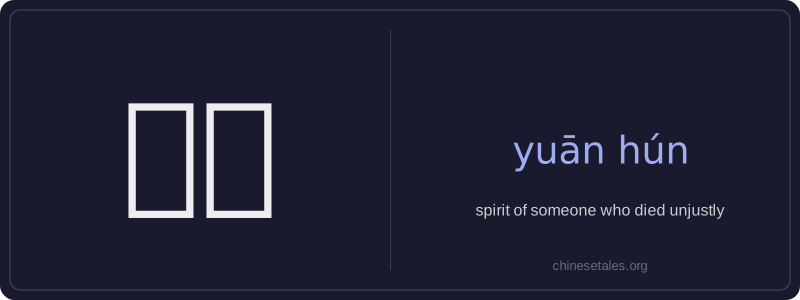
‘冤魂’ literally combines ‘冤’ (yuān), meaning ‘injustice’, ‘wrongful accusation’, or ‘unjust suffering’, and ‘魂’ (hún), meaning ‘soul’ or ‘spirit’. Together, it refers specifically to the restless spirit of a person who died under unjust, wrongful, or tragic circumstances—often due to false accusation, abuse of power, or unavenged murder. This term carries strong emotional and moral weight, implying unresolved grievance and lingering sorrow.
In Chinese literature, folklore, and opera, 冤魂 frequently appears as a spectral figure seeking justice or retribution. It is deeply rooted in traditional beliefs about karma, moral accountability, and the afterlife—where an unjust death prevents peaceful transition. The word is rarely used in neutral or clinical contexts; instead, it evokes pathos, historical injustice, or supernatural tension. While modern usage may be metaphorical (e.g., describing systemic injustice), it remains solemn and culturally resonant—not appropriate for casual or humorous speech.
Example Sentences
Related Words
国语
‘Guó yǔ’ literally means 'national language'—
无论谁
‘无论谁’ (wú lùn shéi) is a pronoun meaning
外语
‘外语’ literally means ‘outside language’ —
不对
不对 (bù duì) literally combines 不 (bù), meani
我的
我的 (wǒ de) is a possessive pronoun meaning 'my'
违规
违规 (wéi guī) literally means 'to violate rules
亲笔
‘亲笔’ literally means ‘one’s own hand’—comb
面条
‘面条’ (miàn tiáo) literally means ‘flour str