Word Explanation
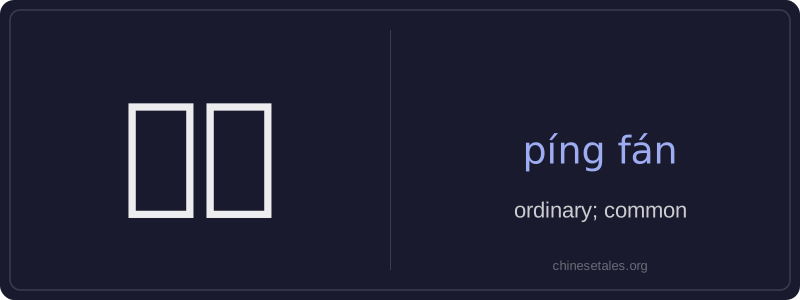
平凡 (píng fán) is an adjective meaning 'ordinary' or 'common' — describing people, things, or experiences that are unremarkable, typical, or lacking special distinction. The character 平 means 'level', 'calm', or 'even', suggesting stability and absence of extremes; 凡 means 'common', 'everyday', or 'ordinary'. Together, they emphasize a quiet, unexceptional quality — often with neutral or even positive connotations in Chinese culture, where humility and groundedness are valued.
This word frequently appears in reflective or descriptive contexts: talking about everyday life, modest people, routine jobs, or simple joys. It’s commonly used in written language and formal speech, though also heard in conversation. Unlike the English 'ordinary', which can sometimes imply dullness, 平凡 often carries warmth or respect — as in praising someone who lives a humble but meaningful life. It’s rarely used for objects alone (e.g., not 'a平凡 book'); it’s more often applied to people, lives, stories, or experiences.
Example Sentences
Related Words
国语
‘Guó yǔ’ literally means 'national language'—
无论谁
‘无论谁’ (wú lùn shéi) is a pronoun meaning
外语
‘外语’ literally means ‘outside language’ —
不对
不对 (bù duì) literally combines 不 (bù), meani
我的
我的 (wǒ de) is a possessive pronoun meaning 'my'
违规
违规 (wéi guī) literally means 'to violate rules
亲笔
‘亲笔’ literally means ‘one’s own hand’—comb
面条
‘面条’ (miàn tiáo) literally means ‘flour str