Word Explanation
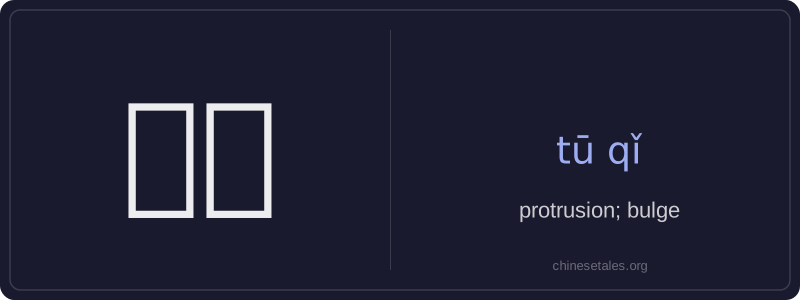
凸起 (tū qǐ) is a noun meaning 'protrusion' or 'bulge' — a part of a surface that sticks out noticeably from its surroundings. The first character 凸 (tū) literally means 'convex' or 'bulging outward', and the second character 起 (qǐ) here functions as a verbal suffix indicating 'rising' or 'emergence', together forming a nominalized concept: something that rises up or projects outward. It describes a physical, three-dimensional feature rather than an abstract idea.
This word appears frequently in scientific, medical, and descriptive contexts — for example, when describing anatomical features like bone protrusions, skin lesions, or terrain features such as rocky outcrops. In zoology, it’s often used to describe natural bodily features on animals, such as the convex shape of a turtle’s shell or bony ridges on a lizard’s head. While it can be used in everyday speech, it carries a slightly formal or technical tone compared to simpler terms like 突出 (tūchū).
Example Sentences
Related Words
国语
‘Guó yǔ’ literally means 'national language'—
无论谁
‘无论谁’ (wú lùn shéi) is a pronoun meaning
外语
‘外语’ literally means ‘outside language’ —
不对
不对 (bù duì) literally combines 不 (bù), meani
我的
我的 (wǒ de) is a possessive pronoun meaning 'my'
违规
违规 (wéi guī) literally means 'to violate rules
亲笔
‘亲笔’ literally means ‘one’s own hand’—comb
面条
‘面条’ (miàn tiáo) literally means ‘flour str