Word Explanation
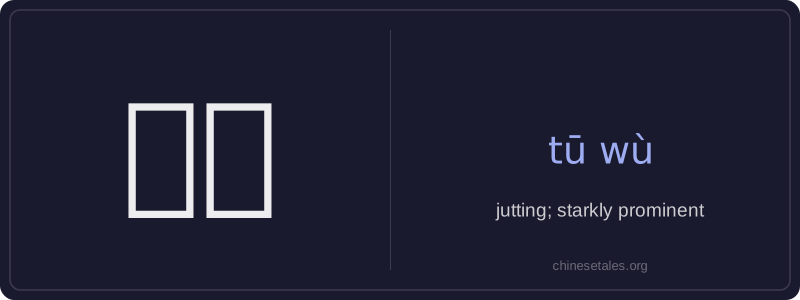
凸兀 (tū wù) is an adjective describing something that juts out abruptly or stands out starkly against its surroundings—like a rocky outcrop rising sharply from flat terrain or an oddly prominent feature in an otherwise smooth surface. The character 凸 means 'convex' or 'protruding', while 兀 conveys 'bare', 'steep', or 'isolated prominence'; together, they intensify the sense of abrupt, unsoftened projection. It’s often used in descriptive writing about landscapes, architecture, or visual compositions where contrast and sharp relief are emphasized.
This word carries a slightly literary or formal tone and appears more frequently in written Chinese than in casual speech. It evokes visual tension—think of a lone cliff face, an angular modern sculpture in a garden, or even a person’s unusually prominent cheekbones described in a novel. Though it can occasionally describe abstract prominence (e.g., a sudden, conspicuous issue), its core meaning remains rooted in physical, three-dimensional salience.
Example Sentences
Related Words
国语
‘Guó yǔ’ literally means 'national language'—
无论谁
‘无论谁’ (wú lùn shéi) is a pronoun meaning
外语
‘外语’ literally means ‘outside language’ —
不对
不对 (bù duì) literally combines 不 (bù), meani
我的
我的 (wǒ de) is a possessive pronoun meaning 'my'
违规
违规 (wéi guī) literally means 'to violate rules
亲笔
‘亲笔’ literally means ‘one’s own hand’—comb
面条
‘面条’ (miàn tiáo) literally means ‘flour str