Word Explanation
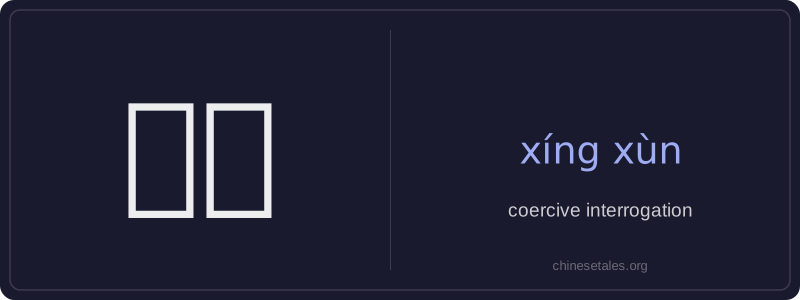
‘刑讯’ (xíng xùn) literally combines 刑 (xíng), meaning ‘punishment’ or ‘penal’, and 讯 (xùn), meaning ‘to interrogate’ or ‘to question’. Together, it refers specifically to coercive interrogation — the use of physical or psychological pressure, threats, or torture during questioning, typically by law enforcement or judicial authorities. It is a formal, legal term with strong negative connotations, emphasizing illegality and violation of human rights.
This word appears almost exclusively in legal, journalistic, or academic contexts discussing criminal procedure, judicial reform, or human rights abuses. It is not used in everyday conversation and carries serious ethical and legal weight. In modern Chinese law, 刑讯逼供 (xíng xùn bī gòng) — ‘coercive interrogation to extract confessions’ — is explicitly prohibited, making 刑讯 a term associated with misconduct, not standard practice.
Example Sentences
Related Words
国语
‘Guó yǔ’ literally means 'national language'—
无论谁
‘无论谁’ (wú lùn shéi) is a pronoun meaning
外语
‘外语’ literally means ‘outside language’ —
不对
不对 (bù duì) literally combines 不 (bù), meani
我的
我的 (wǒ de) is a possessive pronoun meaning 'my'
违规
违规 (wéi guī) literally means 'to violate rules
亲笔
‘亲笔’ literally means ‘one’s own hand’—comb
面条
‘面条’ (miàn tiáo) literally means ‘flour str