Word Explanation
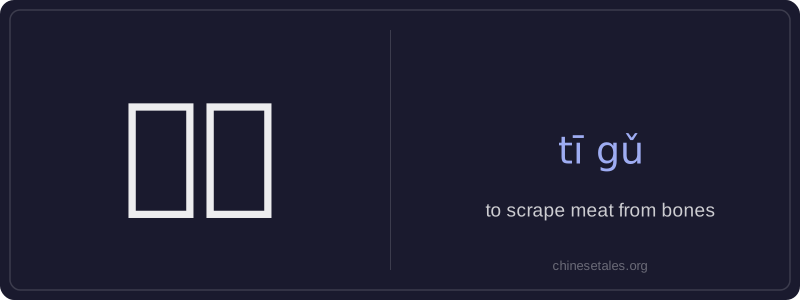
'剔骨' (tī gǔ) literally means 'to pick out the bone' — the character 剔 (tī) conveys the action of removing, scraping, or extracting something carefully (like picking out fish bones or trimming fat), while 骨 (gǔ) means 'bone'. Together, the term refers specifically to the meticulous process of separating meat from bones, typically done by butchers, chefs, or home cooks preparing poultry, pork, or lamb for cooking. It emphasizes precision and skill, not just cutting.
This verb is most commonly used in culinary, food-processing, or butchery contexts — for example, when deboning chicken thighs before stir-frying or preparing boneless ribs. It implies intentional, careful removal rather than rough cutting; the goal is to preserve as much usable meat as possible while leaving clean, bone-free pieces. Though occasionally used metaphorically (e.g., '剔骨抽筋' as an idiom for exhaustive analysis), its primary meaning remains concrete and practical.
Example Sentences
Related Words
国语
‘Guó yǔ’ literally means 'national language'—
无论谁
‘无论谁’ (wú lùn shéi) is a pronoun meaning
外语
‘外语’ literally means ‘outside language’ —
不对
不对 (bù duì) literally combines 不 (bù), meani
我的
我的 (wǒ de) is a possessive pronoun meaning 'my'
违规
违规 (wéi guī) literally means 'to violate rules
亲笔
‘亲笔’ literally means ‘one’s own hand’—comb
面条
‘面条’ (miàn tiáo) literally means ‘flour str