Word Explanation
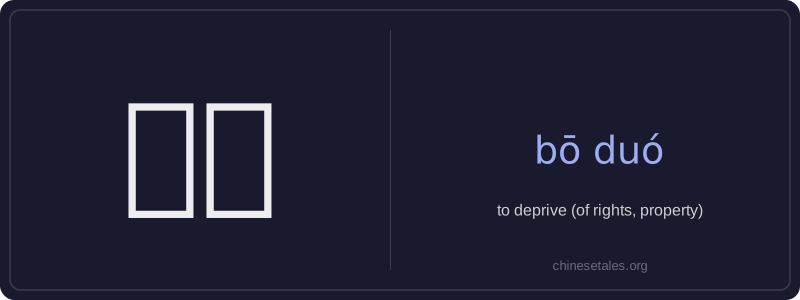
‘剥夺’ is a formal verb meaning 'to deprive someone of something valuable or essential'—most commonly rights, property, freedom, or legal status. The first character 剥 (bō) means 'to peel off' or 'to strip away', suggesting removal by force or authority; the second character 夺 (duó) means 'to seize' or 'to take by force', reinforcing the idea of involuntary loss. Together, they form a compound that conveys authoritative, often legally sanctioned, removal—not casual loss or voluntary giving up.
This word appears frequently in legal, political, and medical contexts—for example, when courts revoke rights, governments restrict freedoms, or illnesses impair bodily functions (e.g., ‘剥夺睡眠’ — 'deprive of sleep'). It carries a strong negative connotation and implies injustice or serious consequence. Unlike more neutral terms like ‘取消’ (to cancel), ‘剥夺’ suggests irreversible or severe loss imposed by a higher power.
Example Sentences
Related Words
国语
‘Guó yǔ’ literally means 'national language'—
无论谁
‘无论谁’ (wú lùn shéi) is a pronoun meaning
外语
‘外语’ literally means ‘outside language’ —
不对
不对 (bù duì) literally combines 不 (bù), meani
我的
我的 (wǒ de) is a possessive pronoun meaning 'my'
违规
违规 (wéi guī) literally means 'to violate rules
亲笔
‘亲笔’ literally means ‘one’s own hand’—comb
面条
‘面条’ (miàn tiáo) literally means ‘flour str