Word Explanation
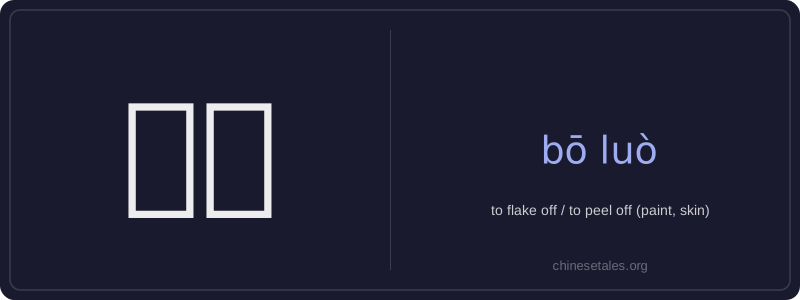
‘剥落’ (bō luò) is a verb meaning 'to flake off' or 'to peel off', typically describing the gradual, often natural or weather-related detachment of outer layers—such as paint from a wall, bark from a tree, rust from metal, or dead skin from dry hands. The first character 剥 means 'to peel' or 'to strip', and the second character 落 means 'to fall' or 'to drop'; together, they vividly convey the action of something coming away in fragments or layers due to aging, exposure, or deterioration.
This word is commonly used in descriptive, observational, or slightly formal contexts—especially when discussing physical decay, restoration work, botany, or art conservation. It implies an incomplete, uneven, or partial detachment—not a clean, intentional removal like peeling fruit (which uses 剥皮). It’s often paired with nouns like 油漆 (paint), 树皮 (bark), 瓷器釉面 (glaze on porcelain), or 皮肤 (skin), and frequently appears in passive constructions or with degree adverbs like 已经, 逐渐, or 大片地.
Example Sentences
Related Words
国语
‘Guó yǔ’ literally means 'national language'—
无论谁
‘无论谁’ (wú lùn shéi) is a pronoun meaning
外语
‘外语’ literally means ‘outside language’ —
不对
不对 (bù duì) literally combines 不 (bù), meani
我的
我的 (wǒ de) is a possessive pronoun meaning 'my'
违规
违规 (wéi guī) literally means 'to violate rules
亲笔
‘亲笔’ literally means ‘one’s own hand’—comb
面条
‘面条’ (miàn tiáo) literally means ‘flour str