Word Explanation
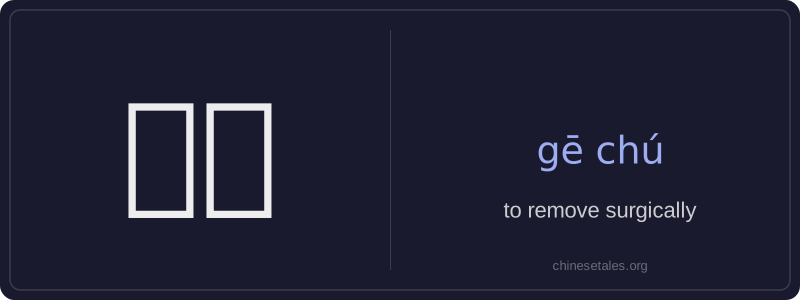
割除 (gē chú) is a formal, medical verb meaning 'to remove surgically'—typically referring to the excision of tissue, organs, or growths using a cutting instrument like a scalpel. The first character 割 (gē) means 'to cut' or 'to sever', while 除 (chú) means 'to remove' or 'to eliminate'. Together, they emphasize deliberate, physical removal by cutting, distinguishing it from non-invasive methods like medication or ablation. This term appears frequently in clinical reports, surgical consent forms, and doctor–patient discussions about procedures.
It is commonly used with nouns denoting anatomical structures or pathological tissues—for example, '割除肿瘤' (remove a tumor) or '割除阑尾' (remove the appendix). Unlike general verbs like 切除 (qiēchú), which also means 'to excise', 割除 carries a slightly more technical and traditional connotation, often appearing in written medical Chinese rather than casual speech. It implies complete physical separation from the body and is rarely used metaphorically.
Example Sentences
Related Words
国语
‘Guó yǔ’ literally means 'national language'—
无论谁
‘无论谁’ (wú lùn shéi) is a pronoun meaning
外语
‘外语’ literally means ‘outside language’ —
不对
不对 (bù duì) literally combines 不 (bù), meani
我的
我的 (wǒ de) is a possessive pronoun meaning 'my'
违规
违规 (wéi guī) literally means 'to violate rules
亲笔
‘亲笔’ literally means ‘one’s own hand’—comb
面条
‘面条’ (miàn tiáo) literally means ‘flour str