Word Explanation
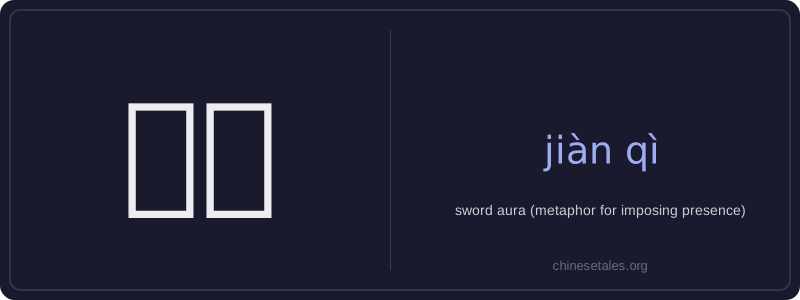
'Jiàn qì' literally means 'sword aura' — a poetic, classical compound where 剑 (jiàn) means 'sword' and 气 (qì) means 'vital energy' or 'aura'. In traditional Chinese literature and martial arts fiction, it refers to an invisible but palpable force radiating from a highly skilled swordsman — not physical breath, but an intense, intimidating presence that can make bystanders feel uneasy or awestruck. It’s a metaphorical extension of qì, evoking sharpness, precision, and unyielding authority.
This term is rarely used in modern daily speech; instead, it appears mainly in wuxia novels, films, poetry, and figurative descriptions of commanding personalities — such as a stern judge entering court or a revered teacher silencing a noisy classroom with just their gaze. Though rooted in martial imagery, its usage today emphasizes psychological impact over literal combat, highlighting how cultural concepts of energy and presence shape expressive language.
Example Sentences
Related Words
国语
‘Guó yǔ’ literally means 'national language'—
无论谁
‘无论谁’ (wú lùn shéi) is a pronoun meaning
外语
‘外语’ literally means ‘outside language’ —
不对
不对 (bù duì) literally combines 不 (bù), meani
我的
我的 (wǒ de) is a possessive pronoun meaning 'my'
违规
违规 (wéi guī) literally means 'to violate rules
亲笔
‘亲笔’ literally means ‘one’s own hand’—comb
面条
‘面条’ (miàn tiáo) literally means ‘flour str