Word Explanation
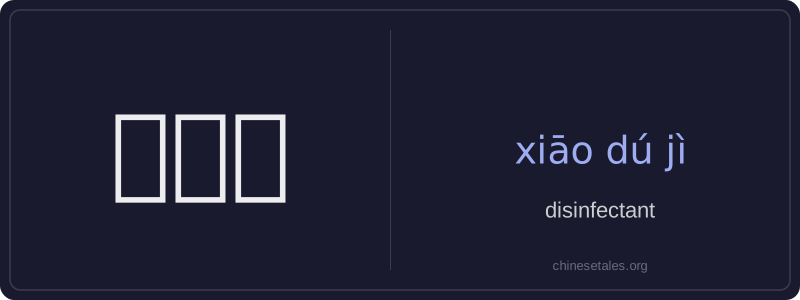
消毒剂 (xiāo dú jì) literally means 'eliminate-poison-agent' — combining 消 (to remove or eliminate), 毒 (poison or harmful microorganisms), and 剂 (a chemical agent or substance). It refers to any substance used to kill or inhibit the growth of bacteria, viruses, fungi, and other pathogens on surfaces, skin, or objects. Unlike antibiotics (which act inside the body), disinfectants work externally and are commonly applied in medical settings, households, and public spaces.
This word is widely used in contexts involving hygiene, infection control, and public health. Common types include alcohol-based solutions (e.g., 75% ethanol), chlorine bleach, hydrogen peroxide, and quaternary ammonium compounds. While similar to 'antiseptic', 消毒剂 typically denotes stronger agents for non-living surfaces, whereas antiseptics (like iodine tincture) are milder and safe for skin use.
Example Sentences
Related Words
国语
‘Guó yǔ’ literally means 'national language'—
无论谁
‘无论谁’ (wú lùn shéi) is a pronoun meaning
外语
‘外语’ literally means ‘outside language’ —
不对
不对 (bù duì) literally combines 不 (bù), meani
我的
我的 (wǒ de) is a possessive pronoun meaning 'my'
违规
违规 (wéi guī) literally means 'to violate rules
亲笔
‘亲笔’ literally means ‘one’s own hand’—comb
面条
‘面条’ (miàn tiáo) literally means ‘flour str