Word Explanation
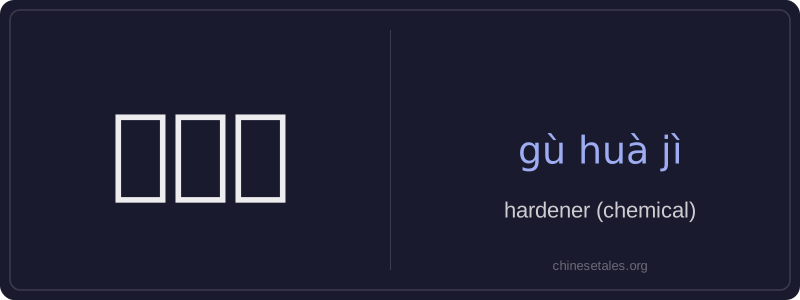
'固化剂' (gù huà jì) literally means 'solidifying agent': 固 (gù) means 'firm' or 'solid', 化 (huà) means 'to change' or 'to transform', and 剂 (jì) means 'agent' or 'substance used for a specific chemical purpose'. Together, the term refers to a chemical additive that triggers or accelerates the hardening, curing, or cross-linking process in materials like resins, adhesives, coatings, and dental composites.
This word is widely used in industrial manufacturing, construction, dentistry, and DIY projects. It’s essential in two-part systems — for example, epoxy resin requires a separate固化剂 to transition from liquid to solid. Unlike general terms like 'hardener', 固化剂 emphasizes the chemical mechanism of solidification, not just physical hardness. It is a technical, formal term — rarely used in casual speech — and appears frequently in safety data sheets, product labels, and professional instructions.
Example Sentences
Related Words
国语
‘Guó yǔ’ literally means 'national language'—
无论谁
‘无论谁’ (wú lùn shéi) is a pronoun meaning
外语
‘外语’ literally means ‘outside language’ —
不对
不对 (bù duì) literally combines 不 (bù), meani
我的
我的 (wǒ de) is a possessive pronoun meaning 'my'
违规
违规 (wéi guī) literally means 'to violate rules
亲笔
‘亲笔’ literally means ‘one’s own hand’—comb
面条
‘面条’ (miàn tiáo) literally means ‘flour str