Word Explanation
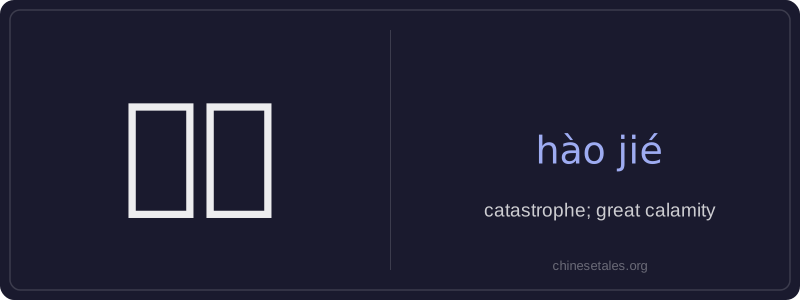
浩劫 (hào jié) is a formal, literary noun meaning 'catastrophe' or 'great calamity' — an event of immense scale and devastating impact, often with profound historical, social, or moral weight. The first character 浩 (hào) means 'vast', 'immense', or 'boundless', evoking magnitude and overwhelming force; the second character 劫 (jié) means 'calamity', 'plunder', or 'disaster', historically linked to Buddhist concepts of cyclical world-ending catastrophes. Together, they intensify each other: not just any disaster, but one of epic, sweeping destruction.
This term is commonly used in historical, political, or philosophical contexts — for instance, referring to wars, famines, or societal collapses — and carries solemn, often somber connotations. It appears frequently in written Chinese (essays, news analysis, literature) but rarely in casual speech. While 劫 alone can mean 'robbery' or 'kidnapping' in modern usage, 浩劫 always retains its grand, tragic sense and never refers to minor misfortunes.
Example Sentences
Related Words
国语
‘Guó yǔ’ literally means 'national language'—
无论谁
‘无论谁’ (wú lùn shéi) is a pronoun meaning
外语
‘外语’ literally means ‘outside language’ —
不对
不对 (bù duì) literally combines 不 (bù), meani
我的
我的 (wǒ de) is a possessive pronoun meaning 'my'
违规
违规 (wéi guī) literally means 'to violate rules
亲笔
‘亲笔’ literally means ‘one’s own hand’—comb
面条
‘面条’ (miàn tiáo) literally means ‘flour str