Word Explanation
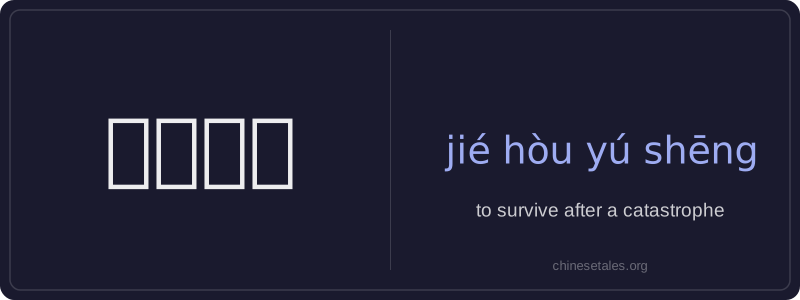
‘劫后余生’ literally means ‘remaining life after a calamity’ — ‘劫’ (jié) refers to a sudden disaster or catastrophe (like war, earthquake, or serious illness); ‘后’ (hòu) means ‘after’; ‘余’ (yú) means ‘remaining’ or ‘leftover’; and ‘生’ (shēng) means ‘life’ or ‘existence’. Together, the phrase describes the state of having narrowly survived a life-threatening crisis. It carries strong emotional weight — gratitude, relief, fragility, and sometimes trauma — and is often used in reflective, literary, or solemn contexts.
This term is not used for minor setbacks (e.g., missing a bus), but for events that genuinely threaten survival: major accidents, natural disasters, critical illness, or wartime danger. It emphasizes both the gravity of what was endured and the preciousness of continued life. While grammatically a noun, it frequently functions as a subject or predicate noun in sentences expressing profound personal transformation or gratitude.
Example Sentences
Related Words
国语
‘Guó yǔ’ literally means 'national language'—
无论谁
‘无论谁’ (wú lùn shéi) is a pronoun meaning
外语
‘外语’ literally means ‘outside language’ —
不对
不对 (bù duì) literally combines 不 (bù), meani
我的
我的 (wǒ de) is a possessive pronoun meaning 'my'
违规
违规 (wéi guī) literally means 'to violate rules
亲笔
‘亲笔’ literally means ‘one’s own hand’—comb
面条
‘面条’ (miàn tiáo) literally means ‘flour str