Word Explanation
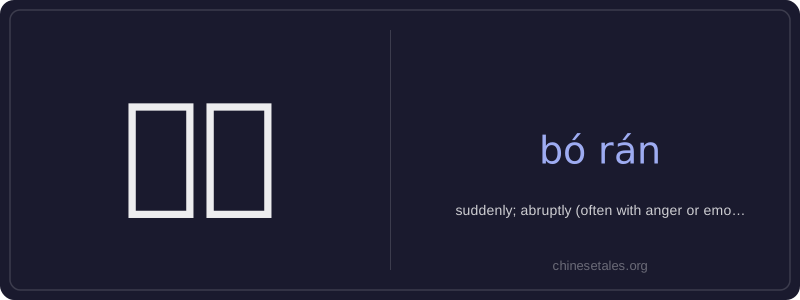
勃然 is an adverb meaning 'suddenly' or 'abruptly', almost always describing a rapid, intense emotional shift—especially anger, indignation, or outrage. The first character 勃 (bó) means 'to surge', 'to burst forth', evoking sudden energy or force; the second character 然 (rán) functions as a classical adverbial suffix meaning 'in such a manner', similar to English '-ly'. Together, they form a literary yet commonly used expression that emphasizes the immediacy and intensity of an emotional reaction.
This word appears frequently in written Chinese and formal speech, though it’s also heard in serious spoken contexts—for example, when someone loses their temper unexpectedly or reacts with sharp moral disapproval. It typically modifies verbs like 发怒 (fā nù, 'to get angry'), 大怒 (dà nù, 'to become furious'), or 变色 (biàn sè, 'to change color/flush'). Unlike neutral words like 突然 (tū rán), 勃然 carries strong emotional coloring and often implies a loss of composure.
Example Sentences
Related Words
国语
‘Guó yǔ’ literally means 'national language'—
无论谁
‘无论谁’ (wú lùn shéi) is a pronoun meaning
外语
‘外语’ literally means ‘outside language’ —
不对
不对 (bù duì) literally combines 不 (bù), meani
我的
我的 (wǒ de) is a possessive pronoun meaning 'my'
违规
违规 (wéi guī) literally means 'to violate rules
亲笔
‘亲笔’ literally means ‘one’s own hand’—comb
面条
‘面条’ (miàn tiáo) literally means ‘flour str