Word Explanation
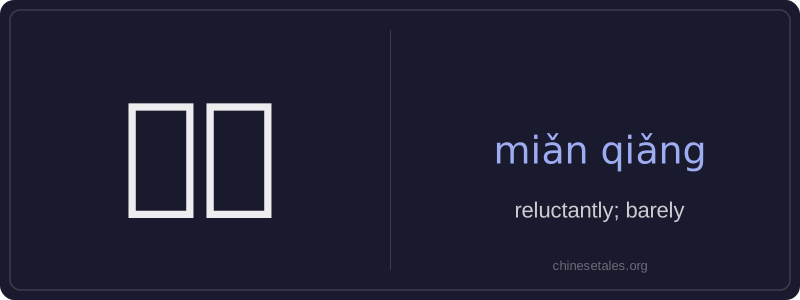
‘勉强’ is an adverb meaning 'reluctantly' or 'with difficulty/barely.' Though it contains the character 强 (which usually means 'strong'), here it’s pronounced qiǎng — a special reading indicating effort against resistance. The first character 勉 means 'to exert oneself' or 'to try hard,' and together they convey doing something despite inner hesitation, lack of enthusiasm, or insufficient capacity. It often implies psychological resistance or marginal adequacy — for example, accepting an invitation you don’t really want to attend, or passing a test by the narrowest margin.
This word frequently appears before verbs (e.g., 勉强答应, 勉强完成) and carries a subtle tone of resignation or compromise. It’s neutral in register but leans slightly formal or literary in spoken Chinese; in casual speech, people may use 更好 or 算了吧 instead for similar pragmatic effects. Note that ‘勉强’ is never used as a noun or verb — only as an adverb or, rarely, an adjective before nouns (e.g., 勉强的笑容).
Example Sentences
Related Words
国语
‘Guó yǔ’ literally means 'national language'—
无论谁
‘无论谁’ (wú lùn shéi) is a pronoun meaning
外语
‘外语’ literally means ‘outside language’ —
不对
不对 (bù duì) literally combines 不 (bù), meani
我的
我的 (wǒ de) is a possessive pronoun meaning 'my'
违规
违规 (wéi guī) literally means 'to violate rules
亲笔
‘亲笔’ literally means ‘one’s own hand’—comb
面条
‘面条’ (miàn tiáo) literally means ‘flour str