Word Explanation
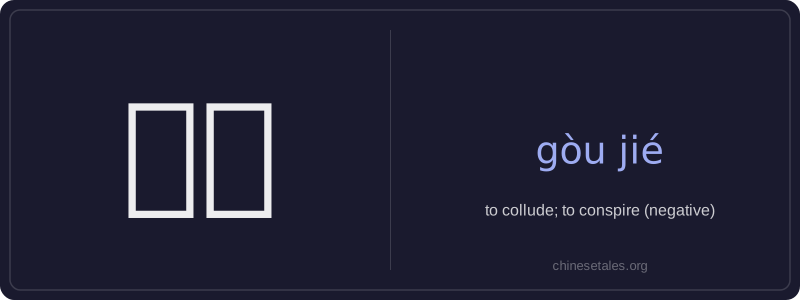
‘勾结’ is a verb meaning to secretly collude or conspire with others—usually for dishonest, illegal, or harmful purposes. The first character 勾 (gòu) originally means ‘to hook’ or ‘to draw’, suggesting connection or linkage; the second character 结 (jié) means ‘to tie’ or ‘to join’, reinforcing the idea of binding together. Combined, they evoke an image of people secretly linking hands behind the scenes, often in secrecy and with negative intent. It carries strong moral and legal connotations, implying betrayal of trust, abuse of power, or undermining of rules.
This word is commonly used in political, legal, journalistic, and anti-corruption contexts—such as describing collusion between officials and businesses, criminals and insiders, or hostile external forces and domestic actors. It is never neutral: even grammatically correct usage implies condemnation. While it can appear in formal writing and news reports, it’s rarely used in casual conversation due to its serious, accusatory tone.
Example Sentences
Related Words
国语
‘Guó yǔ’ literally means 'national language'—
无论谁
‘无论谁’ (wú lùn shéi) is a pronoun meaning
外语
‘外语’ literally means ‘outside language’ —
不对
不对 (bù duì) literally combines 不 (bù), meani
我的
我的 (wǒ de) is a possessive pronoun meaning 'my'
违规
违规 (wéi guī) literally means 'to violate rules
亲笔
‘亲笔’ literally means ‘one’s own hand’—comb
面条
‘面条’ (miàn tiáo) literally means ‘flour str