Word Explanation
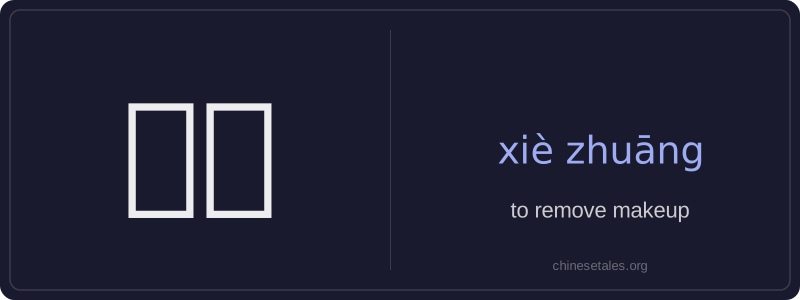
卸妆 (xiè zhuāng) literally means 'to remove makeup' — 卸 (xiè) means 'to unload, take off, or remove', and 妆 (zhuāng) means 'makeup' or 'cosmetic application'. Together, they form a common verb phrase used in daily personal care routines, especially in skincare contexts. It refers specifically to the process of cleansing the face to eliminate foundation, eyeliner, lipstick, and other cosmetic products applied earlier in the day.
This term is widely used in beauty tutorials, product labels (e.g., 卸妆水 'makeup-removing water'), and health-related discussions about skin hygiene. While it can be used as a noun in some compound nouns (e.g., 卸妆产品 'makeup-removal products'), its primary grammatical function is verbal — typically appearing after time or subject markers (e.g., 晚上要卸妆 'You must remove your makeup at night') and often followed by objects like 水 (water), 油 (oil), or 棉片 (cotton pads).
Example Sentences
Related Words
国语
‘Guó yǔ’ literally means 'national language'—
无论谁
‘无论谁’ (wú lùn shéi) is a pronoun meaning
外语
‘外语’ literally means ‘outside language’ —
不对
不对 (bù duì) literally combines 不 (bù), meani
我的
我的 (wǒ de) is a possessive pronoun meaning 'my'
违规
违规 (wéi guī) literally means 'to violate rules
亲笔
‘亲笔’ literally means ‘one’s own hand’—comb
面条
‘面条’ (miàn tiáo) literally means ‘flour str