Word Explanation
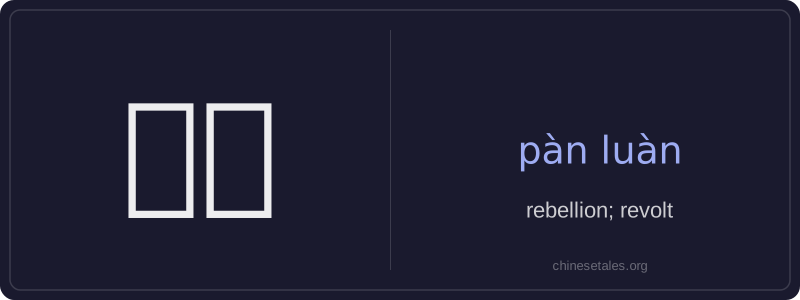
叛乱 (pàn luàn) is a formal noun meaning 'rebellion' or 'revolt' — an organized, often armed, uprising against an established government or authority. The first character 叛 (pàn) means 'to betray' or 'to rebel', carrying strong connotations of disloyalty and defiance; the second character 乱 (luàn) means 'chaos', 'disorder', or 'turmoil'. Together, they emphasize both the act of breaking allegiance and the resulting social instability. This term is typically used in historical, political, or journalistic contexts — not for casual disagreements or minor protests.
叛乱 implies serious, large-scale resistance with intent to overthrow or challenge legitimate rule. It appears frequently in textbooks, news reports about civil unrest, and historical accounts of dynastic collapses or colonial resistance. Because of its gravity, it’s rarely used metaphorically and never in lighthearted or personal contexts — saying someone ‘started a rebellion’ over a small issue would sound absurdly exaggerated in Chinese.
Example Sentences
Related Words
国语
‘Guó yǔ’ literally means 'national language'—
无论谁
‘无论谁’ (wú lùn shéi) is a pronoun meaning
外语
‘外语’ literally means ‘outside language’ —
不对
不对 (bù duì) literally combines 不 (bù), meani
我的
我的 (wǒ de) is a possessive pronoun meaning 'my'
违规
违规 (wéi guī) literally means 'to violate rules
亲笔
‘亲笔’ literally means ‘one’s own hand’—comb
面条
‘面条’ (miàn tiáo) literally means ‘flour str