Word Explanation
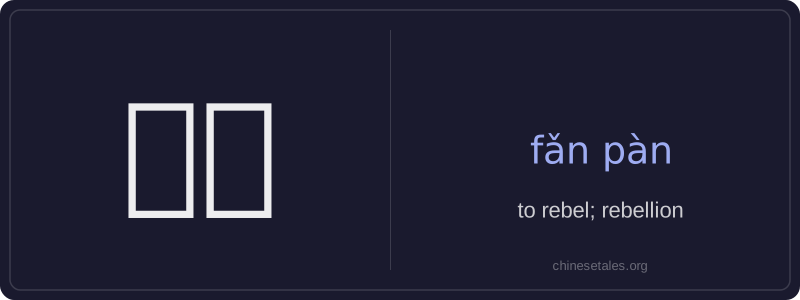
反叛 (fǎn pàn) is a compound word meaning 'rebellion' as a noun or 'to rebel' as a verb. The first character 反 (fǎn) means 'to oppose' or 'to go against'; the second, 叛 (pàn), means 'to betray' or 'to defect'. Together, they emphasize active, often organized resistance against authority—whether political, social, familial, or institutional. Unlike milder terms like 抗议 (kàngyì, 'to protest'), 反叛 carries stronger connotations of defiance, rupture, and moral or ideological break.
This word appears frequently in historical narratives, literature, and discussions about youth development, social movements, or psychological growth. It’s commonly used to describe both collective uprisings (e.g., peasant rebellions) and personal acts of nonconformity (e.g., a teenager rejecting parental expectations). While neutral in dictionary definition, context often lends it a slightly negative or dramatic tone—especially in official discourse—but can also be valorized in stories of liberation or self-actualization.
Example Sentences
Related Words
国语
‘Guó yǔ’ literally means 'national language'—
无论谁
‘无论谁’ (wú lùn shéi) is a pronoun meaning
外语
‘外语’ literally means ‘outside language’ —
不对
不对 (bù duì) literally combines 不 (bù), meani
我的
我的 (wǒ de) is a possessive pronoun meaning 'my'
违规
违规 (wéi guī) literally means 'to violate rules
亲笔
‘亲笔’ literally means ‘one’s own hand’—comb
面条
‘面条’ (miàn tiáo) literally means ‘flour str