Word Explanation
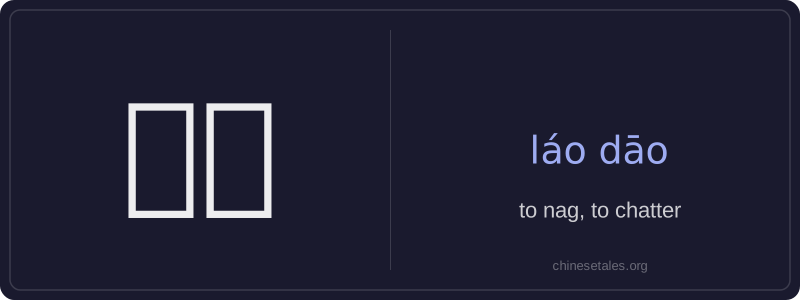
‘唠叨’ is a reduplicated verb meaning to nag or chatter repetitively, often about trivial matters. The character 唠 (láo) originally relates to speaking in a low voice or chatting idly, while 叨 (dāo) intensifies the sense of persistent, sometimes tiresome talking — together they form an onomatopoeic, rhythmic compound that conveys both frequency and mild irritation. It’s commonly used to describe parents, spouses, or elders who repeatedly give advice, warnings, or reminders.
This word carries a slightly negative or affectionately exasperated tone — not harsh criticism, but gentle complaint about over-talkativeness. It’s most natural in informal spoken contexts and rarely appears in formal writing. Unlike neutral words like ‘talk’, 唠叨 implies excess: the speaker feels the listener is being overly repetitive, perhaps without listening in return. It can function as both verb (e.g., 她总爱唠叨) and noun (e.g., 听够了她的唠叨), though the verbal use is far more common.
Example Sentences
Related Words
国语
‘Guó yǔ’ literally means 'national language'—
无论谁
‘无论谁’ (wú lùn shéi) is a pronoun meaning
外语
‘外语’ literally means ‘outside language’ —
不对
不对 (bù duì) literally combines 不 (bù), meani
我的
我的 (wǒ de) is a possessive pronoun meaning 'my'
违规
违规 (wéi guī) literally means 'to violate rules
亲笔
‘亲笔’ literally means ‘one’s own hand’—comb
面条
‘面条’ (miàn tiáo) literally means ‘flour str