Word Explanation
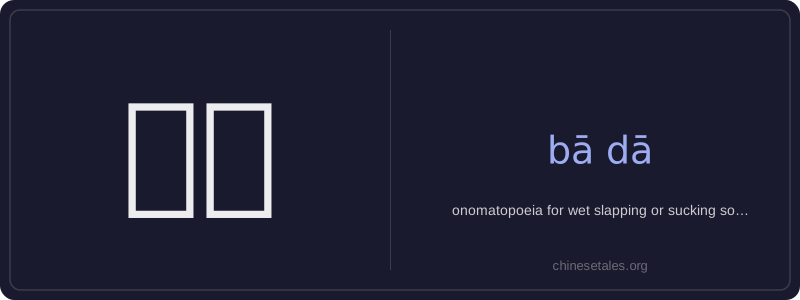
‘叭哒’ (bā dā) is a reduplicated onomatopoeic word that mimics short, wet, soft slapping or sucking sounds — like the noise made when lips part after suction, a frog’s tongue snapping back, or a duck’s beak closing on mud. The first character 叭 (bā) suggests a sharp, abrupt sound, while 哒 (dā) adds a softer, resonant follow-up, together forming a rhythmic, two-syllable auditory image. This word is not used for loud or harsh noises (like ‘bang’ or ‘crash’), but specifically for moist, gentle, often repetitive sounds associated with movement involving adhesion or release.
It appears most frequently in descriptive writing, children’s stories, and casual speech — especially when depicting animals (e.g., ducks, frogs, pigs) or human actions like licking, kissing, or stepping in puddles. While it carries no inherent emotion, context can make it playful, silly, or slightly gross. It functions grammatically as a noun (e.g., ‘发出叭哒声’) or an interjection (e.g., ‘叭哒!嘴一松就掉了’), and rarely stands alone without a verb or noun complement.
Example Sentences
Related Words
国语
‘Guó yǔ’ literally means 'national language'—
无论谁
‘无论谁’ (wú lùn shéi) is a pronoun meaning
外语
‘外语’ literally means ‘outside language’ —
不对
不对 (bù duì) literally combines 不 (bù), meani
我的
我的 (wǒ de) is a possessive pronoun meaning 'my'
违规
违规 (wéi guī) literally means 'to violate rules
亲笔
‘亲笔’ literally means ‘one’s own hand’—comb
面条
‘面条’ (miàn tiáo) literally means ‘flour str