Word Explanation
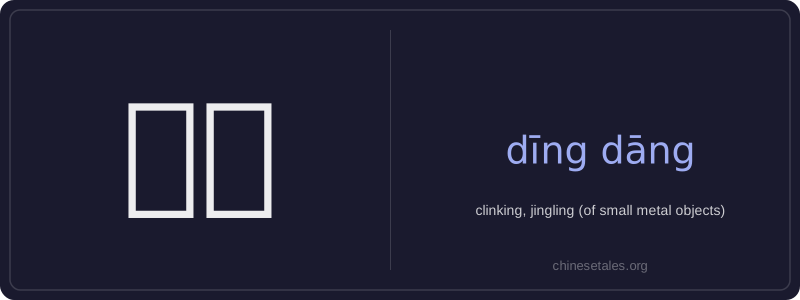
‘叮当’ is an onomatopoeic noun that imitates the light, high-pitched clinking or jingling sound made by small metal objects—such as tiny bells, keys, or charms—when they strike each other or a hard surface. The two characters together form a reduplicated sound word: ‘叮’ suggests a sharp, single metallic tap, while ‘当’ adds a resonant, slightly lower ring; together, they evoke a rhythmic, cheerful, or attention-grabbing chime.
This word is commonly used in descriptive contexts involving movement and sound—especially when something is shaking, swinging, or being carried (e.g., a cat’s collar bell, wind chimes, or a child’s toy). It appears frequently in children’s literature, advertising for toys or pet accessories, and casual speech to add vivid auditory imagery. Though it functions grammatically as a noun, it often modifies verbs (e.g., ‘叮当响’) or appears after ‘发出’ (to emit) or ‘传来’ (to come from).
Example Sentences
Related Words
国语
‘Guó yǔ’ literally means 'national language'—
无论谁
‘无论谁’ (wú lùn shéi) is a pronoun meaning
外语
‘外语’ literally means ‘outside language’ —
不对
不对 (bù duì) literally combines 不 (bù), meani
我的
我的 (wǒ de) is a possessive pronoun meaning 'my'
违规
违规 (wéi guī) literally means 'to violate rules
亲笔
‘亲笔’ literally means ‘one’s own hand’—comb
面条
‘面条’ (miàn tiáo) literally means ‘flour str