Word Explanation
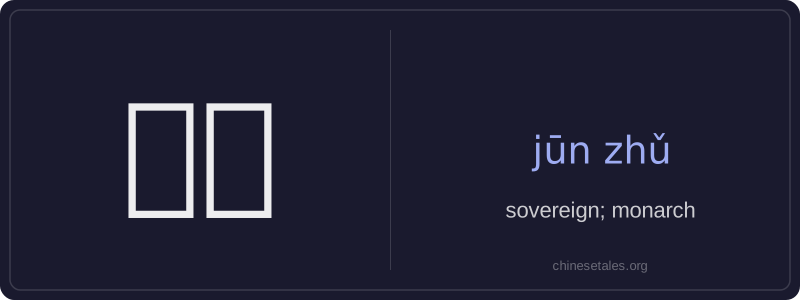
‘君主’ (jūn zhǔ) is a formal, literary noun meaning ‘sovereign’ or ‘monarch’ — a supreme ruler of a state or kingdom, especially in historical or constitutional contexts. The character 君 (jūn) originally meant ‘lord’ or ‘ruler’ and carried connotations of virtue and authority; 主 (zhǔ) means ‘master’, ‘owner’, or ‘principal’. Together, they form a compound emphasizing ultimate political authority and legitimacy, not mere power. Unlike colloquial terms like 国王 (guó wáng, ‘king’) or 皇帝 (huáng dì, ‘emperor’), 君主 is neutral and abstract — it can refer to any hereditary or constitutional head of state, regardless of title or era.
This term appears frequently in history textbooks, political science discussions, and formal writing about governance systems (e.g., 君主立宪制, ‘constitutional monarchy’). It is rarely used in everyday speech and carries no emotional or humorous connotation — it’s strictly academic or ceremonial. While often paired with modifiers (e.g., ‘世袭君主’, ‘hereditary sovereign’), it stands alone as a precise, dignified term for the office of monarchy itself.
Example Sentences
Related Words
国语
‘Guó yǔ’ literally means 'national language'—
无论谁
‘无论谁’ (wú lùn shéi) is a pronoun meaning
外语
‘外语’ literally means ‘outside language’ —
不对
不对 (bù duì) literally combines 不 (bù), meani
我的
我的 (wǒ de) is a possessive pronoun meaning 'my'
违规
违规 (wéi guī) literally means 'to violate rules
亲笔
‘亲笔’ literally means ‘one’s own hand’—comb
面条
‘面条’ (miàn tiáo) literally means ‘flour str