Word Explanation
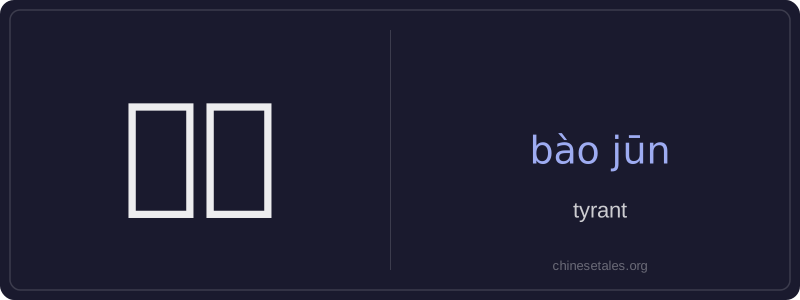
暴君 (bào jūn) literally combines 暴 (bào), meaning 'violent', 'cruel', or 'tyrannical', and 君 (jūn), meaning 'ruler', 'sovereign', or 'lord'. Together, they form a compound noun meaning 'tyrant' — a ruler who exercises absolute power oppressively, often through fear, cruelty, and injustice. Historically, the term appears frequently in Chinese historical texts and literature to describe despotic emperors or warlords whose harsh governance led to rebellion or downfall.
The word carries strong negative connotations and is used primarily in formal, historical, or literary contexts — not for everyday descriptions of authority figures. It implies systemic abuse of power rather than mere strictness or sternness. While 君 alone can be honorific (e.g., in 君子 jūnzǐ, 'gentleman'), adding 暴 transforms it into a pejorative label reserved for morally condemned rulers. Modern usage may extend metaphorically to authoritarian leaders or even satirical references to domineering bosses — but always with clear disapproval.
Example Sentences
Related Words
国语
‘Guó yǔ’ literally means 'national language'—
无论谁
‘无论谁’ (wú lùn shéi) is a pronoun meaning
外语
‘外语’ literally means ‘outside language’ —
不对
不对 (bù duì) literally combines 不 (bù), meani
我的
我的 (wǒ de) is a possessive pronoun meaning 'my'
违规
违规 (wéi guī) literally means 'to violate rules
亲笔
‘亲笔’ literally means ‘one’s own hand’—comb
面条
‘面条’ (miàn tiáo) literally means ‘flour str