Word Explanation
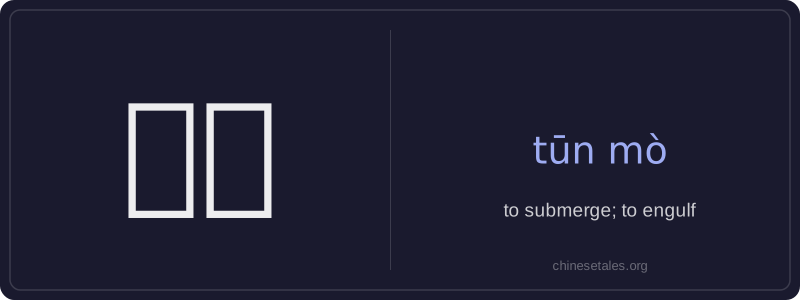
吞没 (tūn mò) is a compound verb meaning 'to submerge' or 'to engulf', often with a sense of overwhelming force or sudden, total coverage. The first character 吞 (tūn) means 'to swallow', evoking ingestion or absorption; the second character 没 (mò) means 'to sink' or 'to disappear underwater', suggesting disappearance beneath a surface. Together, they convey the image of something being completely covered, swallowed up, or erased by a larger, more powerful force — like water flooding land, fire consuming a forest, or debt overwhelming savings.
This word is commonly used in descriptive, literary, or news contexts involving natural disasters, rapid change, or emotional overwhelm. It carries a strong, slightly dramatic tone and is rarely used in casual speech. While it can describe physical submersion (e.g., floodwaters), it’s also frequently metaphorical — for example, describing how anxiety or time 'engulfs' a person. It’s transitive and typically takes a direct object (e.g., 吞没了村庄 — 'engulfed the village').
Example Sentences
Related Words
国语
‘Guó yǔ’ literally means 'national language'—
无论谁
‘无论谁’ (wú lùn shéi) is a pronoun meaning
外语
‘外语’ literally means ‘outside language’ —
不对
不对 (bù duì) literally combines 不 (bù), meani
我的
我的 (wǒ de) is a possessive pronoun meaning 'my'
违规
违规 (wéi guī) literally means 'to violate rules
亲笔
‘亲笔’ literally means ‘one’s own hand’—comb
面条
‘面条’ (miàn tiáo) literally means ‘flour str