Word Explanation
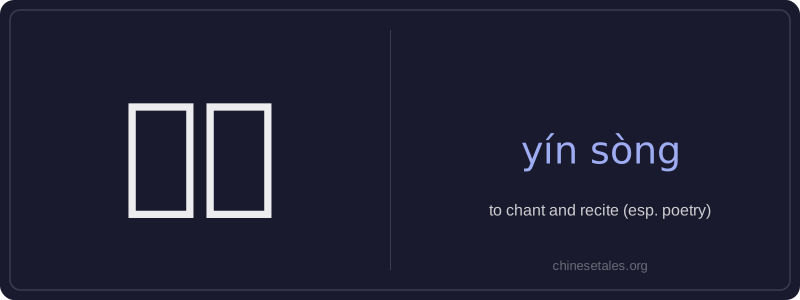
‘吟诵’ (yín sòng) is a literary and performative verb meaning to chant and recite poetry aloud, often with rhythmic intonation, expressive pauses, and melodic inflection. It combines 吟 (yín), which conveys the idea of chanting or humming poetically—evoking emotional resonance and musicality—and 诵 (sòng), meaning to recite or read aloud deliberately, usually with clarity and emphasis. Together, they describe a traditional Chinese practice deeply rooted in classical education and cultural performance.
This activity is commonly associated with studying Tang and Song dynasty poems, preparing for exams in imperial times, or participating in cultural ceremonies today. Unlike plain reading (读 dú), 吟诵 emphasizes vocal artistry, tonal contour, and emotional interpretation. It’s frequently taught in schools with heritage curricula, practiced by scholars, and featured in poetry festivals or Confucian rituals. The word carries a refined, somewhat formal or scholarly register—not used for casual speech or modern prose.
Example Sentences
Related Words
国语
‘Guó yǔ’ literally means 'national language'—
无论谁
‘无论谁’ (wú lùn shéi) is a pronoun meaning
外语
‘外语’ literally means ‘outside language’ —
不对
不对 (bù duì) literally combines 不 (bù), meani
我的
我的 (wǒ de) is a possessive pronoun meaning 'my'
违规
违规 (wéi guī) literally means 'to violate rules
亲笔
‘亲笔’ literally means ‘one’s own hand’—comb
面条
‘面条’ (miàn tiáo) literally means ‘flour str