Word Explanation
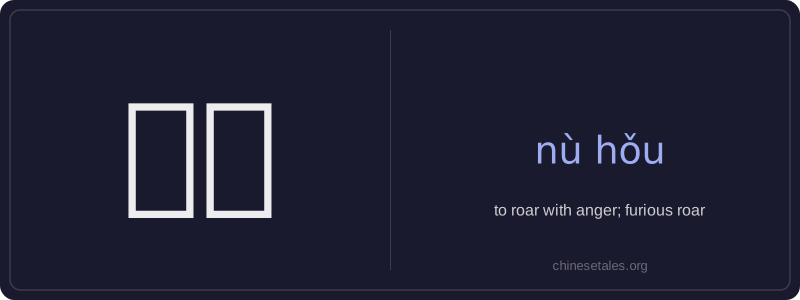
‘怒吼’ is a compound verb meaning ‘to roar with intense anger’—it vividly conveys both emotional fury and loud, forceful vocalization. The first character 怒 (nù) means ‘anger’ or ‘wrath’, carrying strong emotional weight; the second 吼 (hǒu) means ‘to roar’ or ‘to bellow’, often associated with large animals like lions or bears, but also used metaphorically for humans expressing rage. Together, they form a vivid, dramatic action word that emphasizes volume, intensity, and emotional heat.
This term is commonly used in literary, journalistic, or expressive speech—not in casual daily conversation—and appears frequently in descriptions of protests, natural disasters (e.g., roaring wind), animal behavior, or intense human outbursts. It’s more emphatic than simpler verbs like 发火 (fā huǒ, ‘to get angry’) or 大喊 (dà hǎn, ‘to shout’), and often implies loss of control or overwhelming emotion.
Example Sentences
Related Words
国语
‘Guó yǔ’ literally means 'national language'—
无论谁
‘无论谁’ (wú lùn shéi) is a pronoun meaning
外语
‘外语’ literally means ‘outside language’ —
不对
不对 (bù duì) literally combines 不 (bù), meani
我的
我的 (wǒ de) is a possessive pronoun meaning 'my'
违规
违规 (wéi guī) literally means 'to violate rules
亲笔
‘亲笔’ literally means ‘one’s own hand’—comb
面条
‘面条’ (miàn tiáo) literally means ‘flour str