Word Explanation
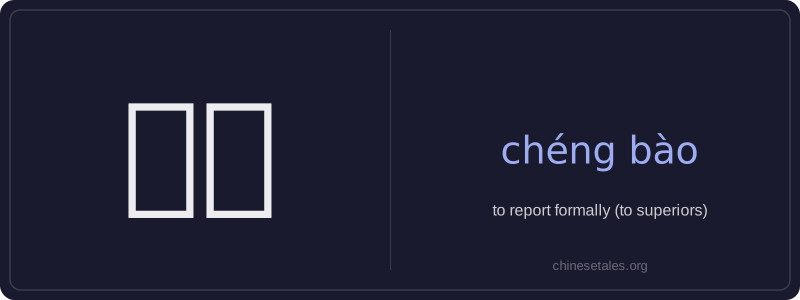
'Chéng bào' is a formal, written verb meaning 'to report (something) officially to a superior or authority.' The character 呈 (chéng) conveys the idea of 'presenting respectfully'—often with humility and deference—while 报 (bào) means 'to report' or 'to inform.' Together, they emphasize both the act of conveying information and the respectful, hierarchical relationship between reporter and recipient. This word is rarely used in casual speech; it appears mainly in official documents, government communications, corporate memos, or historical narratives involving bureaucracy.
It typically follows a subject (e.g., an official, department, or subordinate), takes a direct object (the matter being reported), and often appears with formal time markers like 'upon completion' or 'immediately.' Unlike neutral verbs like 汇报 (huìbào) or 报告 (bàogào), 呈报 carries strong connotations of protocol, rank, and institutional formality—especially in contexts echoing imperial or modern administrative traditions.
Example Sentences
Related Words
国语
‘Guó yǔ’ literally means 'national language'—
无论谁
‘无论谁’ (wú lùn shéi) is a pronoun meaning
外语
‘外语’ literally means ‘outside language’ —
不对
不对 (bù duì) literally combines 不 (bù), meani
我的
我的 (wǒ de) is a possessive pronoun meaning 'my'
违规
违规 (wéi guī) literally means 'to violate rules
亲笔
‘亲笔’ literally means ‘one’s own hand’—comb
面条
‘面条’ (miàn tiáo) literally means ‘flour str