Word Explanation
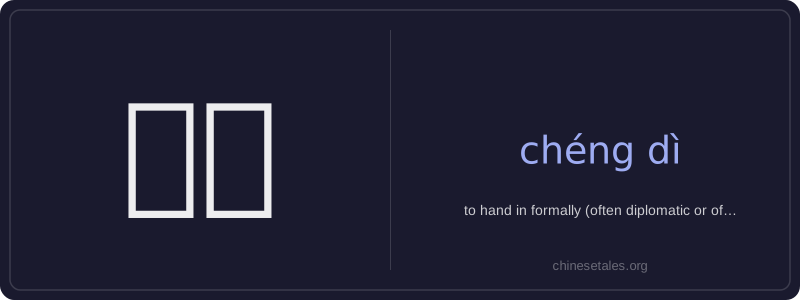
呈递 (chéng dì) is a formal verb meaning 'to hand in' or 'to submit'—especially in official, diplomatic, or ceremonial contexts. The character 呈 (chéng) means 'to present respectfully' and carries connotations of deference and protocol; 递 (dì) means 'to deliver' or 'to pass on'. Together, they emphasize both the respectful presentation and the physical or procedural act of submission. This term is rarely used in casual speech and appears most often in written documents, news reports about diplomacy, or formal institutional settings—such as submitting credentials to a foreign government or delivering a petition to a high-level authority.
Unlike everyday verbs like 提交 (tíjiāo) or 递交 (dìjiāo), 呈递 implies heightened formality and hierarchy: the subject typically holds a lower or subordinate position relative to the recipient. It’s frequently paired with nouns like 国书 (guóshū, 'letters of credence'), 建议书 (jiànyìshū, 'proposal'), or 抗议书 (kàngyìshū, 'protest note'). While grammatically it functions as a transitive verb, its usage is tightly bound to institutional, governmental, or international affairs—not personal or routine tasks.
Example Sentences
Related Words
国语
‘Guó yǔ’ literally means 'national language'—
无论谁
‘无论谁’ (wú lùn shéi) is a pronoun meaning
外语
‘外语’ literally means ‘outside language’ —
不对
不对 (bù duì) literally combines 不 (bù), meani
我的
我的 (wǒ de) is a possessive pronoun meaning 'my'
违规
违规 (wéi guī) literally means 'to violate rules
亲笔
‘亲笔’ literally means ‘one’s own hand’—comb
面条
‘面条’ (miàn tiáo) literally means ‘flour str