Word Explanation
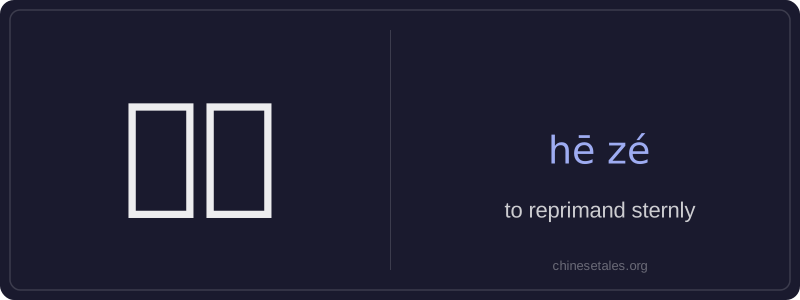
呵责 is a formal, written verb meaning 'to reprimand sternly' or 'to scold harshly', often implying moral disapproval and emotional intensity. The first character 呵 (hē) originally evokes a sharp, breathy sound — like a forceful exhalation or a stern 'huff' — suggesting immediacy and emotional charge. The second character 责 (zé) means 'to blame' or 'to hold responsible', carrying connotations of duty, expectation, and accountability. Together, 呵责 emphasizes not just criticism but a morally weighted, emotionally charged rebuke, typically from someone in authority.
This word appears most frequently in literature, news reports, official statements, or serious discourse — rarely in casual speech. It implies gravity: the person being 呵责 has violated norms, rules, or ethical standards. Unlike milder terms like 批评 (to criticize), 呵责 suggests indignation, urgency, and sometimes public censure. It’s commonly used when describing responses to misconduct by officials, students, or public figures.
Example Sentences
Related Words
国语
‘Guó yǔ’ literally means 'national language'—
无论谁
‘无论谁’ (wú lùn shéi) is a pronoun meaning
外语
‘外语’ literally means ‘outside language’ —
不对
不对 (bù duì) literally combines 不 (bù), meani
我的
我的 (wǒ de) is a possessive pronoun meaning 'my'
违规
违规 (wéi guī) literally means 'to violate rules
亲笔
‘亲笔’ literally means ‘one’s own hand’—comb
面条
‘面条’ (miàn tiáo) literally means ‘flour str