Word Explanation
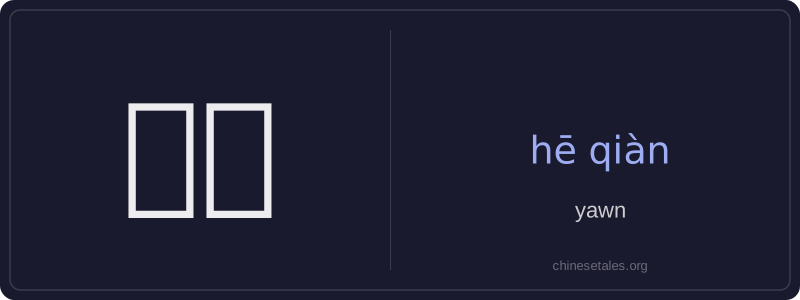
‘呵欠’ (hē qiàn) is a noun meaning ‘yawn’—the involuntary, deep inhalation of air often accompanied by stretching, especially when tired, bored, or waking up. The first character 呵 (hē) suggests an exhalation or breath-related sound, while 欠 (qiàn) literally means ‘to lack’ but in this compound evokes the physical posture of opening the mouth wide, as if ‘lacking’ air. Together, they form a vivid, onomatopoeic compound that captures both the sound and motion of yawning.
This word is commonly used in everyday spoken and written Chinese to describe natural physiological reactions. It appears frequently in descriptions of drowsiness, morning routines, or relaxed states—and occasionally in idioms like ‘呵欠连天’ (yawning constantly, indicating extreme fatigue). Unlike the verb ‘打呵欠’ (to yawn), ‘呵欠’ itself functions only as a noun and typically requires a verb or modifier to indicate action (e.g., ‘打了个呵欠’, ‘揉着眼睛打呵欠’).
Example Sentences
Related Words
国语
‘Guó yǔ’ literally means 'national language'—
无论谁
‘无论谁’ (wú lùn shéi) is a pronoun meaning
外语
‘外语’ literally means ‘outside language’ —
不对
不对 (bù duì) literally combines 不 (bù), meani
我的
我的 (wǒ de) is a possessive pronoun meaning 'my'
违规
违规 (wéi guī) literally means 'to violate rules
亲笔
‘亲笔’ literally means ‘one’s own hand’—comb
面条
‘面条’ (miàn tiáo) literally means ‘flour str