Word Explanation
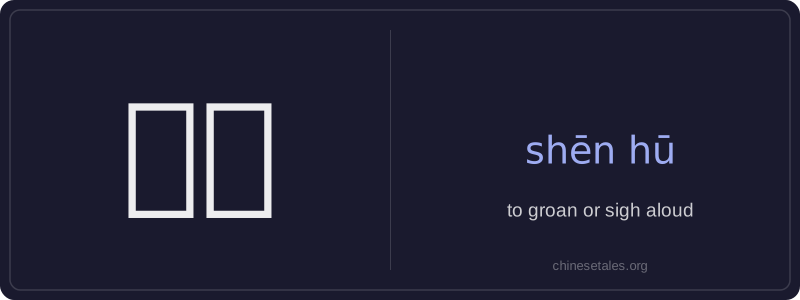
‘呻呼’ is a disyllabic verb meaning to groan or sigh audibly, typically expressing physical discomfort, pain, fatigue, or emotional distress. The first character 呻 (shēn) on its own means 'to groan'—often low, involuntary, and drawn-out—while 呼 (hū) means 'to breathe out' or 'to exhale'. Together, they emphasize the audible, breath-driven nature of the sound: not just silent suffering, but an outward vocalization of inner strain. It’s more literary or descriptive than colloquial, frequently appearing in written narratives, medical reports, or expressive dialogue.
This word is commonly used when describing someone enduring pain (e.g., after injury or illness), extreme exhaustion, or deep sorrow. Unlike casual expressions like ‘唉’ (sighing interjection), 呻呼 conveys a stronger, more visceral physical reaction. It does not imply complaint or protest—it reflects involuntary physiological response. While grammatically it functions as a verb, it rarely takes aspect markers like 了 or 过 in formal usage and is often accompanied by adverbs like 不断地 (continuously) or 痛苦地 (painfully).
Example Sentences
Related Words
国语
‘Guó yǔ’ literally means 'national language'—
无论谁
‘无论谁’ (wú lùn shéi) is a pronoun meaning
外语
‘外语’ literally means ‘outside language’ —
不对
不对 (bù duì) literally combines 不 (bù), meani
我的
我的 (wǒ de) is a possessive pronoun meaning 'my'
违规
违规 (wéi guī) literally means 'to violate rules
亲笔
‘亲笔’ literally means ‘one’s own hand’—comb
面条
‘面条’ (miàn tiáo) literally means ‘flour str