Word Explanation
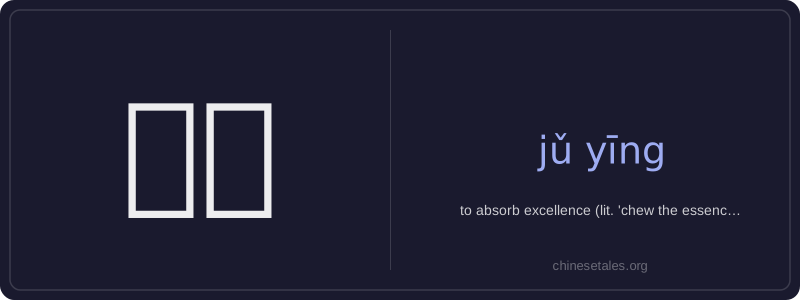
‘咀英’ is a literary, elegant verb meaning 'to absorb excellence' or 'to savor and internalize the finest elements'—often of knowledge, culture, or wisdom. Literally, 咀 (jǔ) means 'to chew' or 'to mull over,' evoking careful, reflective processing; 英 (yīng) means 'essence,' 'excellence,' or 'the finest part,' as in 英才 (yīngcái, 'outstanding talent') or 精英 (jīngyīng, 'elite'). Together, the term metaphorically describes deep, thoughtful engagement with high-quality material—not passive reading, but active digestion and assimilation.
This expression appears frequently in academic, literary, or inspirational contexts: essays on learning methods, speeches about cultural inheritance, or descriptions of scholarly diligence. It carries a formal, refined tone and is rarely used in casual speech. While it can apply to any domain where excellence is absorbed—such as art, philosophy, or science—it most commonly refers to intellectual or moral cultivation through study and reflection.
Example Sentences
Related Words
国语
‘Guó yǔ’ literally means 'national language'—
无论谁
‘无论谁’ (wú lùn shéi) is a pronoun meaning
外语
‘外语’ literally means ‘outside language’ —
不对
不对 (bù duì) literally combines 不 (bù), meani
我的
我的 (wǒ de) is a possessive pronoun meaning 'my'
违规
违规 (wéi guī) literally means 'to violate rules
亲笔
‘亲笔’ literally means ‘one’s own hand’—comb
面条
‘面条’ (miàn tiáo) literally means ‘flour str