Word Explanation
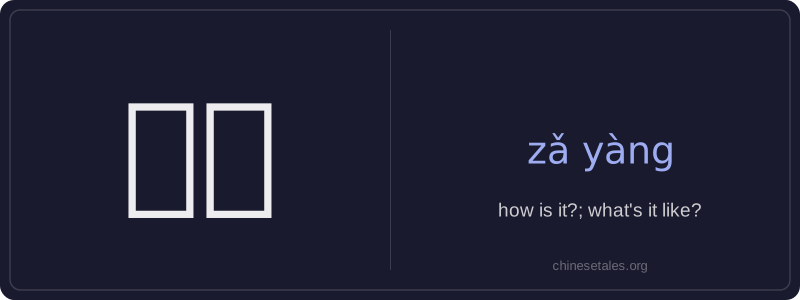
'Zǎ yàng' is a colloquial, informal contraction of 'zěn me yàng', meaning 'how is it?' or 'what's it like?'. Though written with two characters, it functions as a single fixed expression — not a compound noun. '咋' (zǎ) is a northern Chinese dialectal variant of '怎' (zěn, 'how'), and '样' (yàng) means 'kind', 'sort', or 'way', so together they literally ask about the state or nature of something. It’s used to solicit an evaluation, opinion, or description — often in spoken conversation, especially in northern China.
This phrase appears frequently in everyday exchanges: checking on someone’s well-being ('Nǐ zuìjìn zǎ yàng?'), asking about food ('Zhè gè cài zǎ yàng?'), or evaluating a situation ('Zhè ge fāng'àn zǎ yàng?'). It carries no inherent formality or politeness, so avoid using it with superiors or elders without softening particles like 'a' or 'ne' (e.g., 'zǎ yàng a?'). It’s rarely written in formal contexts and almost never appears in textbooks — learners encounter it primarily through listening and speaking.
Example Sentences
Related Words
国语
‘Guó yǔ’ literally means 'national language'—
无论谁
‘无论谁’ (wú lùn shéi) is a pronoun meaning
外语
‘外语’ literally means ‘outside language’ —
不对
不对 (bù duì) literally combines 不 (bù), meani
我的
我的 (wǒ de) is a possessive pronoun meaning 'my'
违规
违规 (wéi guī) literally means 'to violate rules
亲笔
‘亲笔’ literally means ‘one’s own hand’—comb
面条
‘面条’ (miàn tiáo) literally means ‘flour str