Word Explanation
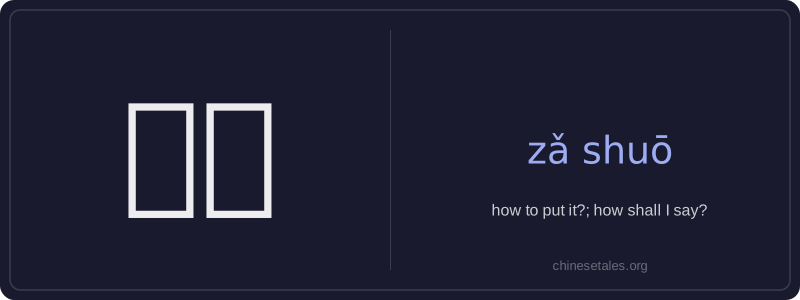
'Zǎ shuō' is a colloquial, conversational expression used to convey hesitation, uncertainty, or mild embarrassment when searching for the right words—similar to 'How do I put it?' or 'How shall I say this?' in English. The character 咋 is a northern Mandarin contraction of 怎么 (zěnme, 'how'), and 说 means 'to speak' or 'to say'. Together, they form an interjection that signals the speaker is pausing to choose phrasing carefully, often before delivering something delicate, awkward, or hard to express.
This phrase frequently appears in spoken Chinese—especially in informal chats, storytelling, or when softening criticism or bad news. It’s not used in formal writing or official speech. Native speakers often pair it with a slight pause, a shrug, or a thoughtful tone. While grammatically it looks like a verb phrase, functionally it acts as a discourse marker, helping manage conversational flow and interpersonal sensitivity.
Example Sentences
Related Words
国语
‘Guó yǔ’ literally means 'national language'—
无论谁
‘无论谁’ (wú lùn shéi) is a pronoun meaning
外语
‘外语’ literally means ‘outside language’ —
不对
不对 (bù duì) literally combines 不 (bù), meani
我的
我的 (wǒ de) is a possessive pronoun meaning 'my'
违规
违规 (wéi guī) literally means 'to violate rules
亲笔
‘亲笔’ literally means ‘one’s own hand’—comb
面条
‘面条’ (miàn tiáo) literally means ‘flour str