Word Explanation
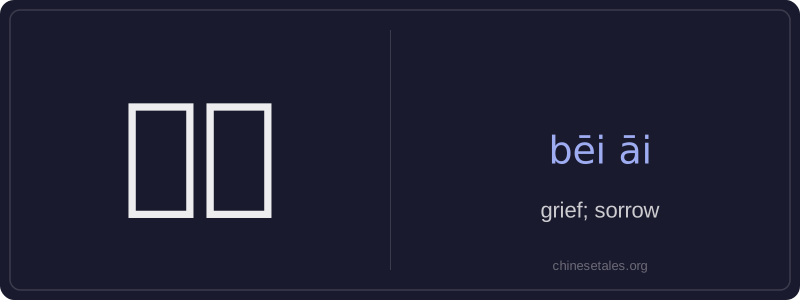
‘悲哀’ is a compound word formed by two characters, both meaning ‘sorrow’ or ‘grief’: 悲 (bēi) conveys deep, inward sorrow—often tied to loss or tragedy—while 哀 (āi) emphasizes outward expression, such as mourning or lamentation. Together, they reinforce each other, creating a formal, literary term for profound, often solemn grief. It’s more intense and weighty than everyday words like 难过 (nánguò) or 伤心 (shāngxīn), and appears frequently in written Chinese—especially in literature, news reports about tragedies, or formal speeches.
This word carries emotional gravity and cultural resonance: it’s associated with Confucian ideals of respectful mourning and reflects how Chinese language layers meaning through synonymic compounding. While it can function as a noun (e.g., ‘a deep悲哀’) or an adjective (e.g., ‘a悲哀 moment’), it rarely stands alone as a predicate verb without additional context or particles like ‘了’ or ‘中’.
Example Sentences
Related Words
国语
‘Guó yǔ’ literally means 'national language'—
无论谁
‘无论谁’ (wú lùn shéi) is a pronoun meaning
外语
‘外语’ literally means ‘outside language’ —
不对
不对 (bù duì) literally combines 不 (bù), meani
我的
我的 (wǒ de) is a possessive pronoun meaning 'my'
违规
违规 (wéi guī) literally means 'to violate rules
亲笔
‘亲笔’ literally means ‘one’s own hand’—comb
面条
‘面条’ (miàn tiáo) literally means ‘flour str